
swelling;
bleeding;
redness;
or an unpleasant odor.
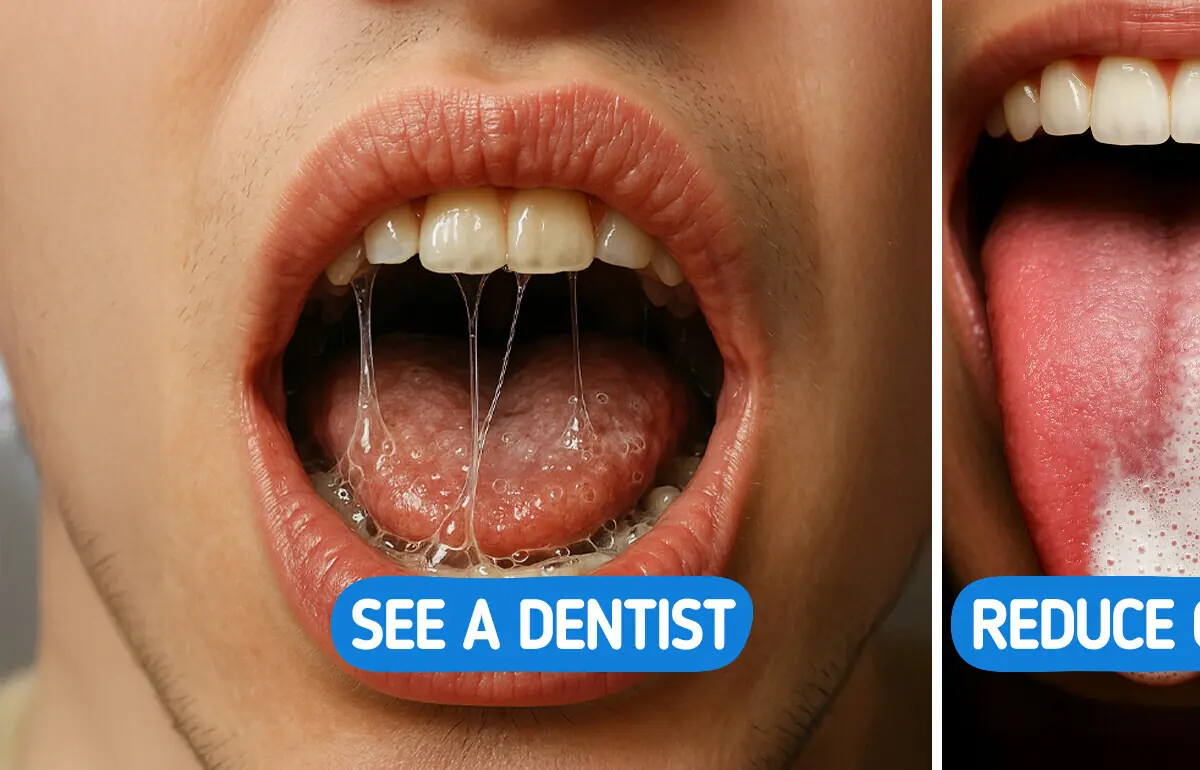
Excess saliva (hypersalivation) can occur for a variety of causes: Cavities, infections, acid reflux, pregnancy, certain medication, and exposure to dangerous substances such as mercury can all produce symptoms, but it normally improves after the problem is treated or, for pregnant women, after childbirth.
Persistent hypersalivation can be caused by long-term health issues that weaken muscular control, making it difficult to swallow and causing saliva to accumulate. This can occur due to a misaligned bite, an enlarged tongue, cerebral palsy, Parkinson’s disease, ALS, or following a stroke. In some circumstances, treating symptoms is critical, since excessive saliva can make it difficult to speak or eat correctly.
What you can do to treat it: see your doctor and if they think that cavities or infection is causing your symptoms, they may recommend you to visit a dentist. Brushing your teeth on a regular basis can help prevent gum inflammation and oral discomfort, both of which can promote drooling. For further benefits, you may choose to use an alcohol-based mouthwash afterward.
If you already have a long-term health problem, your doctor may use a scale to assess how severe your drooling is. This helps them decide how to best treat it.
3. Blood in your saliva
If you spit and notice blood in your saliva, sometimes it may be because you bit yourself, or you brushed too harshly. But sometimes it’s a sign of a serious underlying condition.
Why would your saliva have blood in it?
Gingivitis
This is a common gum condition in which your gums get red, inflamed, and bleed, usually due to inadequate brushing or flossing habits. It can be treated with a professional dental cleaning and improved daily oral hygiene. In serious circumstances, surgery may be required.
Mouth ulcers (canker sores)
They are small, painful sores in your mouth, usually on the gums, lips, or cheeks. They can be caused by biting your cheek, brushing too hard, dental procedures, a lack of certain vitamins (such as B-12 or iron), or consuming hot or acidic meals. Some medical diseases, such as coeliac disease or immunological problems, might also cause them.
Treatment: Most mouth ulcers heal on their own, but if they are large or last more than a few weeks, your doctor may prescribe a special mouthwash or gels. Eating more foods that are high in folate, zinc, and B vitamins can also assist.
See your dentist for regular cleanings and exams every six months. Consider scheduling an immediate appointment if you experience symptoms like:
Recurrent canker sores;
Bleeding gums after brushing and flossing;
Tender, swollen, or red gums;
Gums tearing away from teeth;
Loose teeth;
Unusual sensitivity to temperature;
And difficulty swallowing.
4. A bitter taste in your mouth
Your saliva allows you to swallow and taste, so a constant bitter taste in your mouth might mean that your saliva isn’t performing well. Taste is a complicated sense that can be influenced by many conditions, including poor oral hygiene, dry mouth, and pregnancy. Treating a chronic bitter taste requires treating any underlying illnesses, but people can alleviate the unpleasant taste with several simple home remedies in the meanwhile.
