
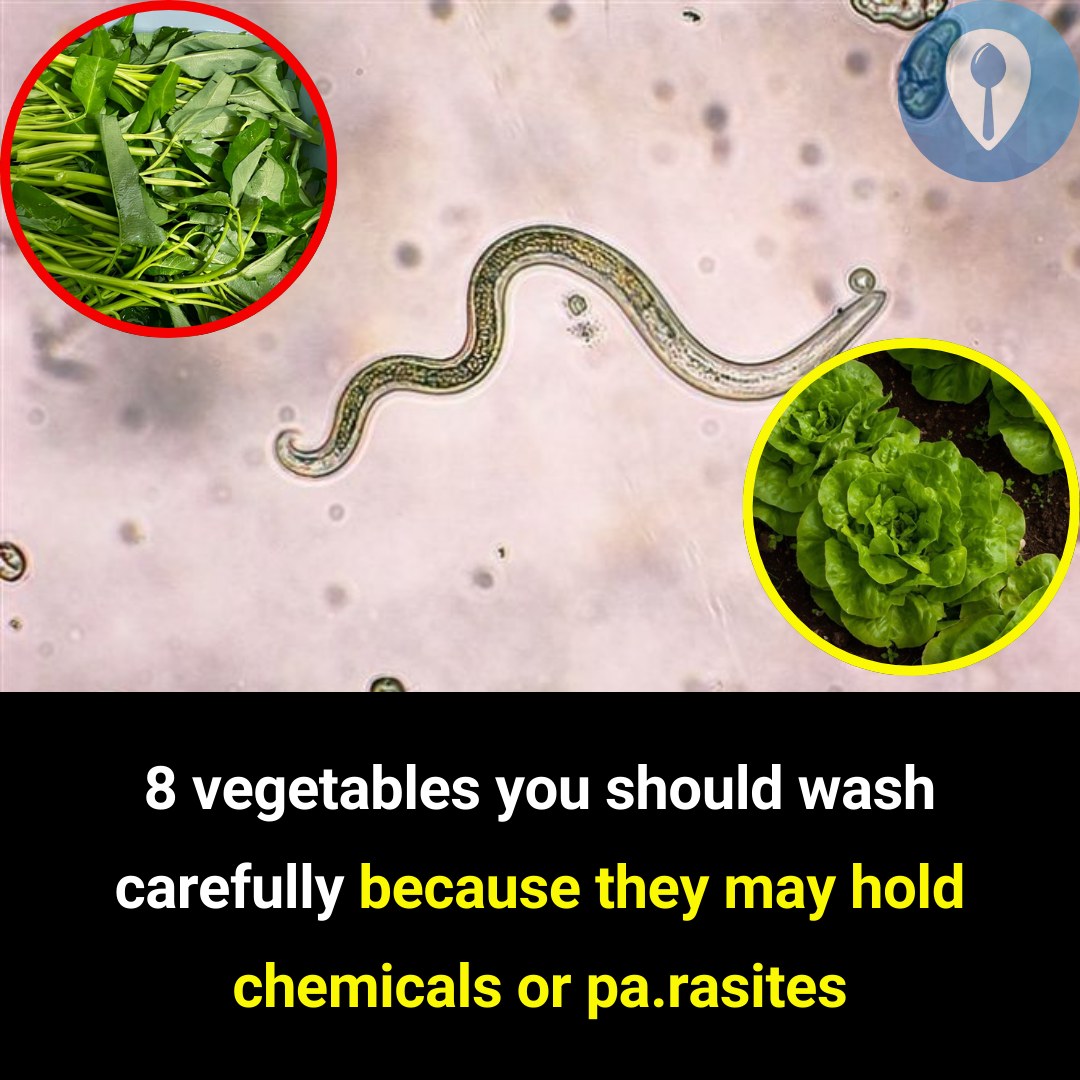
Vegetables are an essential part of a healthy diet. They provide vitamins, minerals, fiber, and antioxidants that support overall well-being and help protect the body from various diseases. However, like many agricultural products, vegetables can sometimes carry pesticide residues, soil contaminants, or microscopic parasites if they are not properly cleaned before consumption.
During farming, vegetables may be exposed to fertilizers, pesticides, or irrigation water that contains bacteria or parasites. In addition, vegetables grown close to the soil or with uneven surfaces can easily trap dirt and microorganisms. For this reason, proper washing and preparation are important steps before eating or cooking vegetables.
Below are eight common vegetables that often require extra attention when washing because they may hold chemicals, soil, or parasites if not handled carefully.
1. Lettuce
Lettuce is widely used in salads and sandwiches, often eaten raw without cooking. Because of its layered leaves and loose structure, dirt and small particles can easily become trapped between the leaves.
Pesticide residues may also remain on the outer layers if the lettuce is not washed thoroughly. To clean lettuce properly, separate the leaves and rinse them individually under running water. Soaking the leaves briefly in clean water can also help remove hidden dirt.
Drying the leaves afterward helps maintain freshness and improves food safety.
