
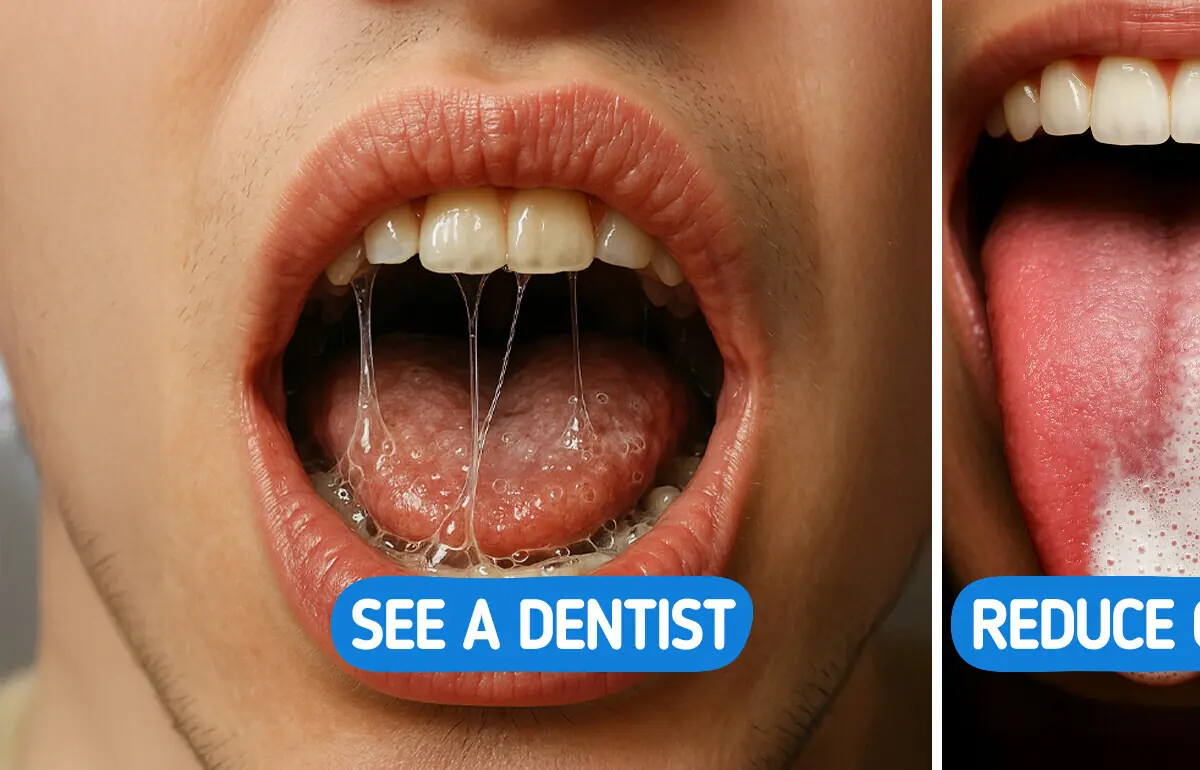
Your saliva carries so much information about your body, but rarely do most of us pay attention to it. Made up of 98-99% of water, your spit holds proteins, hormones, and genetic material that gives clues to how well your body is functioning. Aiding in digestion and oral health, it can point to diseases and track your reproductive health.
So if something is wrong with the texture, quantity, or color of your saliva, then something might be seriously wrong with your health. Here are some signs below.
Content is provided for informational purposes only and is not intended as a substitute for medical advice. Seek guidance from your doctor regarding your health and medical conditions.
1. You’re low on spit.
When your mouth doesn’t produce enough saliva, you’re experiencing dry mouth, also known as Xerostomia. It could indicate that you’re dehydrated, or it could be an after effect of certain medication such as blood pressure medications, antidepressants, as well as some pain and anxiety medication.
It’s usual for people to experience a dry mouth every now and then, but other symptoms that usually come with prolonged Xerostomia are:
Pain or burning in your mouth or throat;
Rough tongue;
Spit can be sticky, thick, or stringy — white and sticky saliva is common in cancer patients getting treatment;
Trouble chewing, swallowing, or speaking;
Persistent bad breath even after brushing your teeth;
Cracked, chapped lips;
Teeth are loose;
Mouth ulcers;
Or new or larger spaces in the teeth.
Advertisement
Dry mouth can also indicate an autoimmune condition known as Sjogren’s syndrome — an immune system disorder that results in dry eyes and mouth. Another common condition with dry mouth as a symptom is diabetes. It could indicate high blood sugar and is usually the first noticeable symptom of diabetes in people.
Other common causes include: Nerve damage affecting the salivary glands, lack of sufficient hydration, undergoing dialysis for kidney problems, frequently breathing through your mouth, certain health conditions, such as HIV, AIDS, and Sjogren’s syndrome, tobacco use, use of specific medications, including those for cancer, high blood pressure, depression, bladder issues, and experiencing stress.
Seek medical attention quickly if you have diabetes and on top of dry mouth, you’re experiencing bleeding from the teeth or mouth, loose teeth, a mouth ache, sores in your mouth, or trouble chewing, swallowing, or speaking.
What you can do to treat it: Staying hydrated by sipping cold water throughout the day and having some by your bedside at night will help with the discomfort that dry mouth causes, as well as brushing teeth twice a day and using alcohol-free mouthwash. Chewing sugar-free gum or sucking on ice can help you increase your saliva production. Dry mouth can typically be efficiently treated by following basic daily oral health practices.
2. You have too much saliva.
Hypersalivation is the term for having so much saliva that could cause you to drool unintentionally. It may be temporary or chronic. Ad constant hypersalivation (sialorrhea), may indicate an underlying condition affecting muscle control. In older kids or adults, drooling could also point to a health issue.
Your doctor can typically tell whether you have too much saliva by asking you about your symptoms. Sometimes tests may be required to determine the cause, and they may examine your mouth for symptoms of:
