
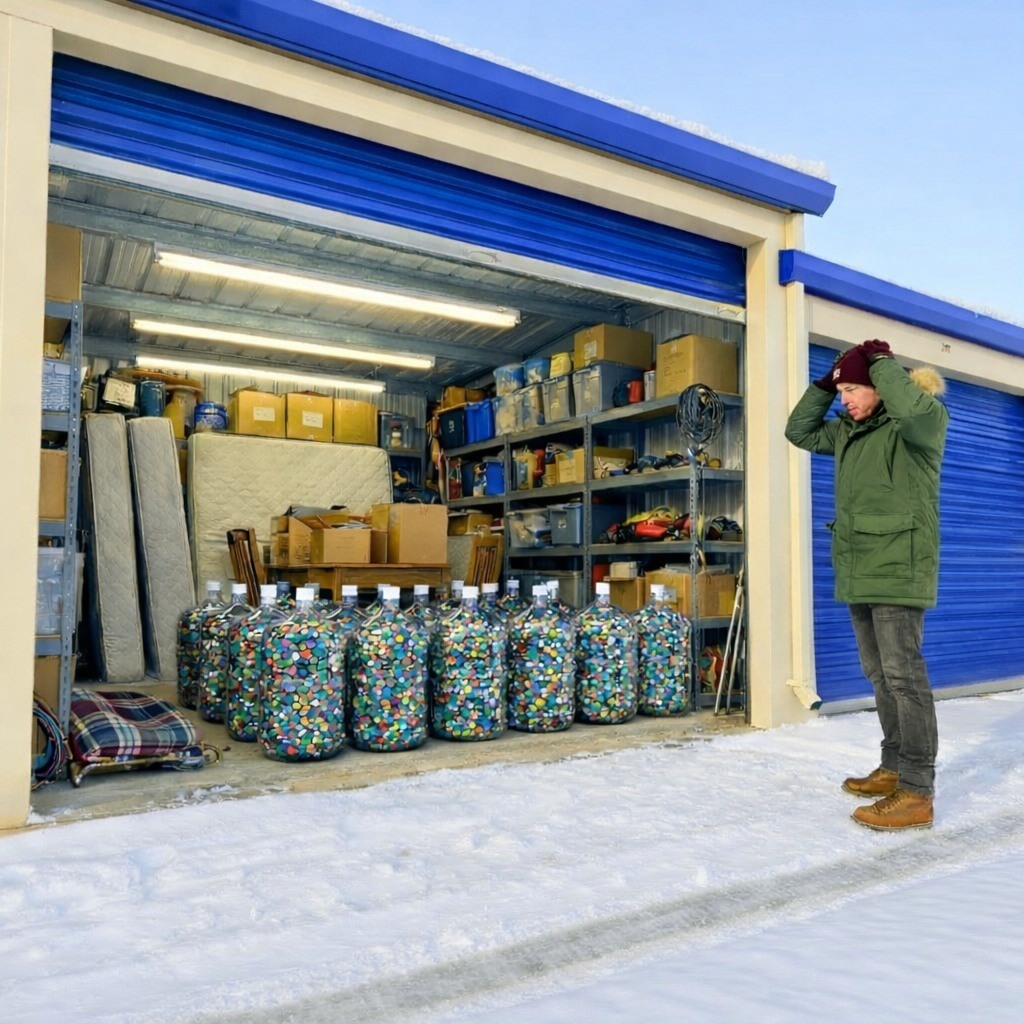
It started as a practical decision.
After the divorce, after the downsizing, after the quiet that followed the chaos, Marcus found himself needing a fresh start — and a way to stretch every dollar. As a single father raising two young kids, he had become resourceful in ways he never imagined. He flipped furniture on weekends. He picked up extra freelance jobs. He learned how to spot value in unlikely places.
That’s what led him to the storage unit auction.
He wasn’t looking for treasure. He wasn’t chasing some reality-TV fantasy of gold bars hidden in forgotten lockers. He was looking for something simple: resale items he could refurbish and sell for a small profit.
But what he found inside one dimly lit unit would change more than his bank account.
It would change his understanding of loss, legacy, and what it means to show up for your children.
The Auction
Storage unit auctions are strangely quiet affairs.
A small crowd gathers outside a metal roll-up door. The auctioneer rattles off a few quick details: unpaid rent, contents unknown, sold as-is. Bidders stand on tiptoe, peering inside from the doorway, trying to assess value in seconds.
Marcus had done this a handful of times before.
Most units contained predictable things: mismatched furniture, plastic bins of clothes, outdated electronics. Sometimes he’d score a decent piece — a mid-century dresser or a solid wood desk. Other times he’d barely break even.
This unit looked unremarkable.
A few boxes. A mattress wrapped in plastic. Two old filing cabinets. A bicycle with a flat tire. Nothing flashy.
But in the back corner, partially hidden behind a stack of bins, was a large wooden trunk.
It looked old. Not antique-store polished, but worn with age.
Marcus placed a modest bid.
And won.
Opening the Door to Someone Else’s Life
There’s something intimate about opening a storage unit you’ve just purchased.
You’re stepping into the paused chapter of someone else’s story.
Marcus waited until the kids were at school before returning with a rented van. He unlocked the unit, rolled the metal door up fully, and stepped inside.
The air smelled faintly of dust and cardboard.
He began sorting.
Clothes went into donation piles. Electronics into a “maybe salvageable” box. The filing cabinets contained old utility bills and paperwork — nothing of value.
Then he reached the trunk.
It was heavier than expected. Solid oak, with brass hinges and a small, tarnished lock that had long since broken.
He lifted the lid.
And paused.
Inside were not valuables in the traditional sense.
There were letters.
Hundreds of them.
Neatly bundled, tied with ribbon.
On top of the stacks lay a black-and-white photograph of a young man in military uniform, smiling at the camera.
The Letters
Marcus sat cross-legged on the concrete floor and untied one bundle.
The handwriting was elegant, looping script in blue ink. The first letter was dated 1968.
