
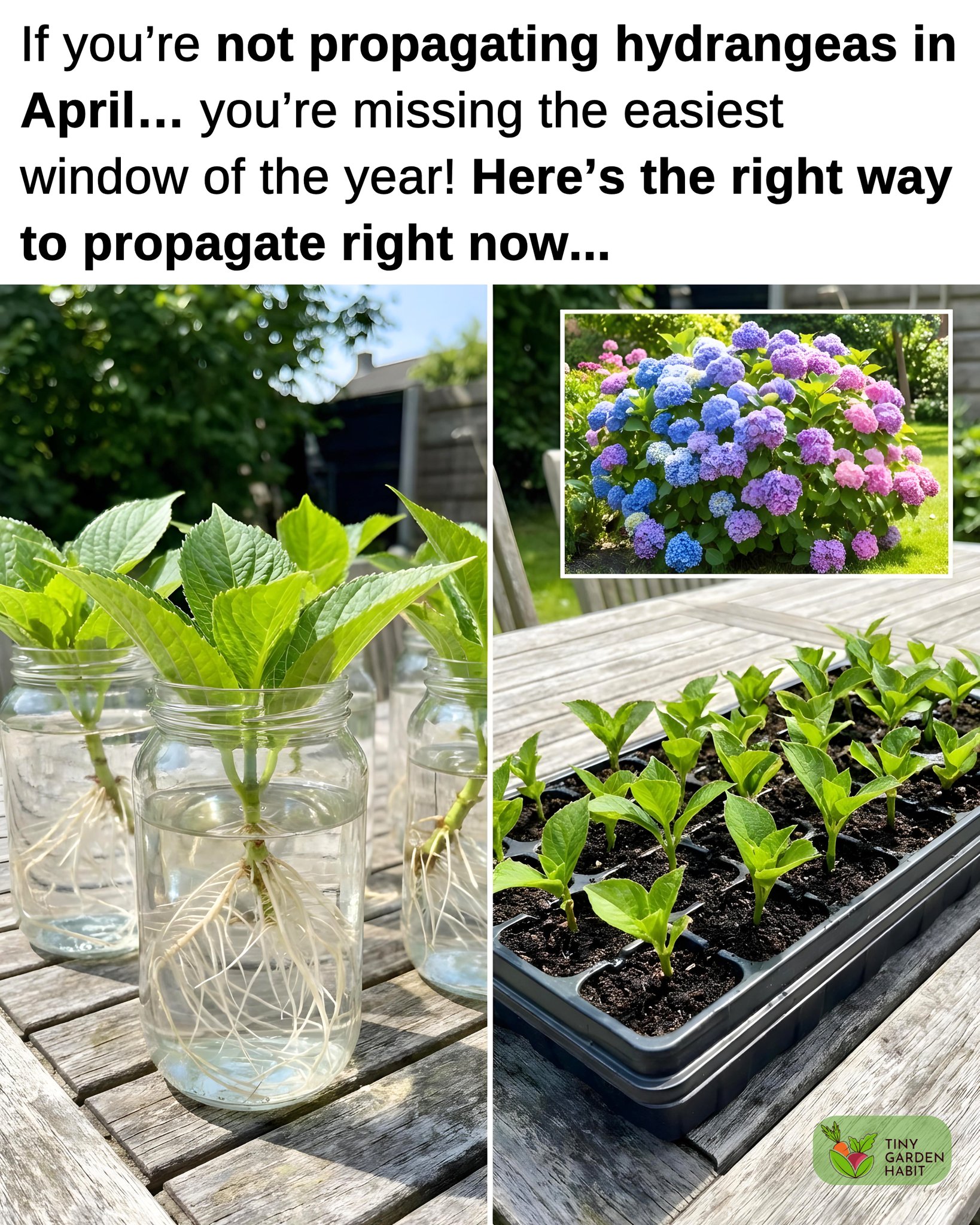
3: Plant and cover

When it comes to planting, the soil type and texture are two very important variables. Generic potting soil works great, but so does a sand/peat mix, as long as it’s given adequate moisture.
Since hydrangeas prefer humidity for optimal rooting and growth, cover your plant with some sort of plastic dome or bag to trap humidity inside.
4: Care while rooting

You can’t just let your cuttings be once you plant them. They need love and attention to root properly. Keep them in bright, indirect light and, instead of heavy watering, mist them lightly from time to time. Proper care should get the stems rooting in about 2-4 weeks.
And once they’re rooted and transplanted to their final spot, take a look at these tips to help your hydrangeas bloom even bigger and brighter as they grow.
How To Take Hardwood Cuttings (Step-By-Step)

1: Choose a mature stem

When it comes to hardwood cuttings, what matters more than picking fresh and healthy stems is looking for mature ones. It should ideally be the same year’s growth that has turned dry and woody.
2: Cut and prepare
 100vw, 1254px” /></figure>
<p>Like with softwood cuttings, <strong><mark class=) cut your stems up to 6 inches and remove most of the leaves. You can optionally dip them in rooting hormone for faster rooting.
cut your stems up to 6 inches and remove most of the leaves. You can optionally dip them in rooting hormone for faster rooting.
3: Plant and wait

Unlike softwood cuttings, hardwood can withstand a lot more clumsiness and pressure from harsh conditions. So, you can actually plant your cuttings outdoors in the garden soil or a cold frame.
Since these cuttings can take longer to root, you’ll have to gather up a lot of patience to wait till spring to get them to start rooting.
That said, you can’t just stick them in the ground and forget about them! They still need a bit of care to root properly. Keep the area lightly moist and make sure they get bright, indirect light. With a little attention, they’ll quietly do their thing over the winter and be ready to grow once warmer days arrive.
Rooting Without Hormone – Does It Work?
 100vw, 1254px” /></figure>
<p>Yes, ofcourse it works! Most cuttings, <strong><mark class=) especially softwood cuttings, can grow reasonably well without ever needing rooting hormone.
especially softwood cuttings, can grow reasonably well without ever needing rooting hormone.
As a matter of fact, most old-school gardeners don’t even use rooting hormones.
For example, my dad just sticks everything straight into the soil (no hormone, no anything) and somehow, almost everything takes root and grows like nothing ever happened. I remember watching him as a kid and thinking, “Wow, propagating plants is easy!” That is, until I tried it myself… and everything dried up within days. Let’s just say it was a humbling moment!
So, rooting hormone is just something the new era of gardeners is starting to adopt now.
If you want to see the actual difference rooting hormone makes, try planting some of your cuttings with rooting hormone and others without it.
Spoiler: The difference won’t be significant, maybe just a slightly faster rooting time.
Also, I put together a list of common hydrangea care mistakes to avoid, especially in spring, if you’re new to growing them.
Try These DIY Alternatives To Rooting Hormone!
 100vw, 1183px” /><figcaption class=) Lemon tree branches stuck in aloe vera leaf for rooting
Lemon tree branches stuck in aloe vera leaf for rootingAftercare – How To Keep Cuttings Alive
 100vw, 1254px” /></figure>
<div class=)

