
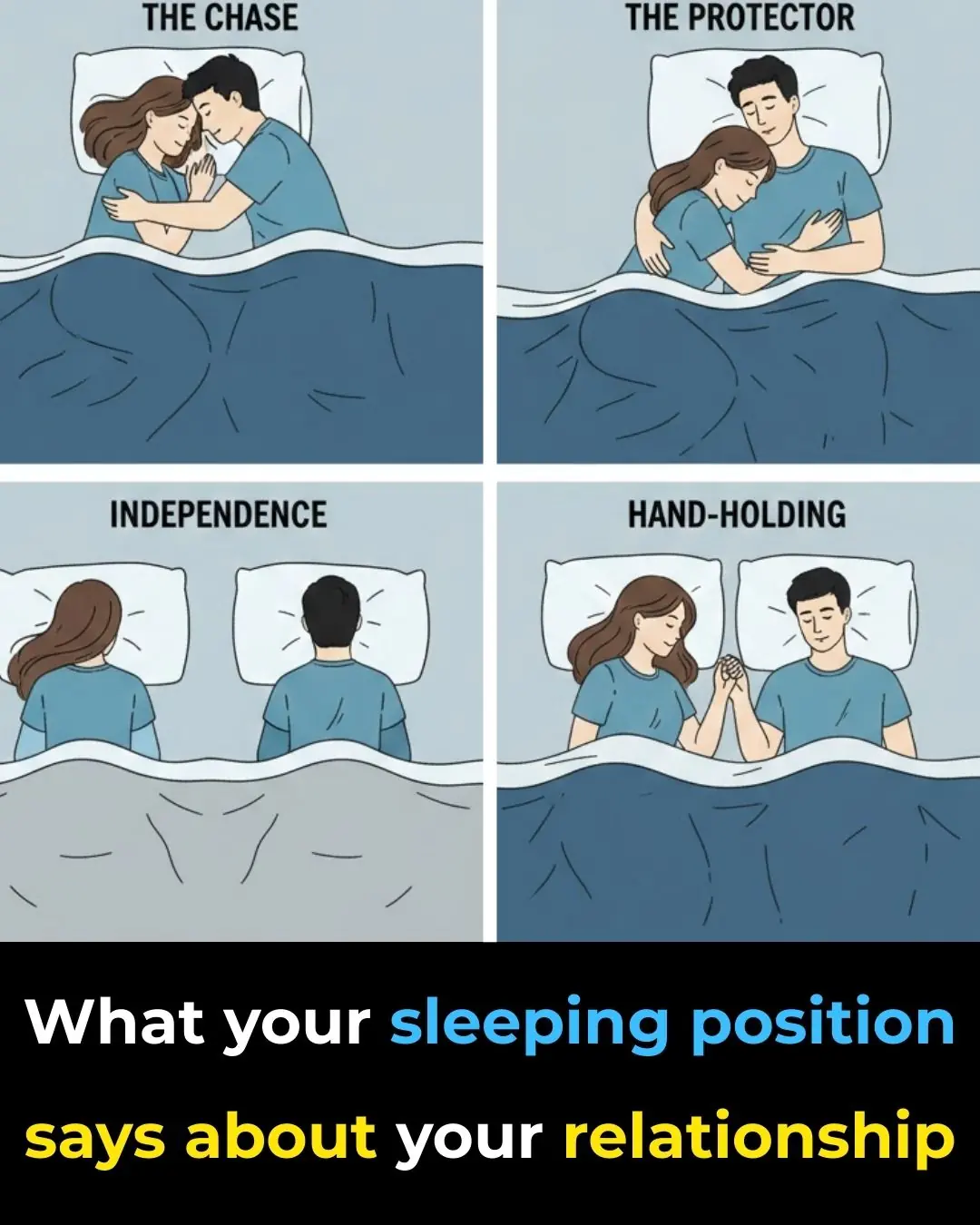
Spooning is iconic for a reason. Roughly one in five couples prefer it.
The “big spoon” often plays the protective role, creating a physical sense of safety. The “little spoon” receives that warmth and security.
This position suggests:
- Trust
- Physical comfort
- Emotional bonding
It’s common during the honeymoon phase, but many couples keep it as a long-term ritual of affection.
A variation — reverse spooning — can reflect playfulness or an equal exchange of nurturing energy.
4. Knotted Up: Passion or Attachment?
When couples are fully entangled — arms and legs intertwined, bodies pressed together — it can look like a scene from a romance movie.
And sometimes, it is.
This position often signals:
- Intense passion
- Infatuation
- Strong emotional bonding
However, if couples remain tightly tangled all night, every night, it may also reflect blurred boundaries or overdependence.
Interestingly, many couples who’ve had a disagreement unconsciously choose this position as a way to reconnect. It can serve as silent reconciliation — closeness without conversation.
The healthiest pattern? Starting the night entwined, then gradually shifting into more personal space. That balance reflects both intimacy and individuality.
5. Back-to-Back: Independence with Trust
At first glance, sleeping back-to-back might seem distant. But in many cases, it signals something quite healthy.
When partners face away but maintain small points of contact — brushing backs, touching feet, a resting hand — it reflects:
- Security
- Mutual trust
- Comfort with independence
Both partners feel safe enough to enjoy personal space while still staying connected.
However, if contact disappears entirely and distance becomes the norm, it may signal stress or unresolved tension.
As always, context matters.
The Silent Language of Sleep
The way we sleep beside someone isn’t usually intentional. It’s instinctive.
And that’s what makes it meaningful.
Sometimes it’s a protective embrace.
Sometimes it’s a quiet declaration of independence.
Sometimes it’s just fingertips touching in the dark.
Your body often speaks more honestly in sleep than your words do when you’re awake.
So tomorrow morning, pause for a moment.
Notice how you were positioned.
Notice who reached for whom.
Because in the silent language of sleep, there may be a love story unfolding — or a message gently waiting to be understood.
