
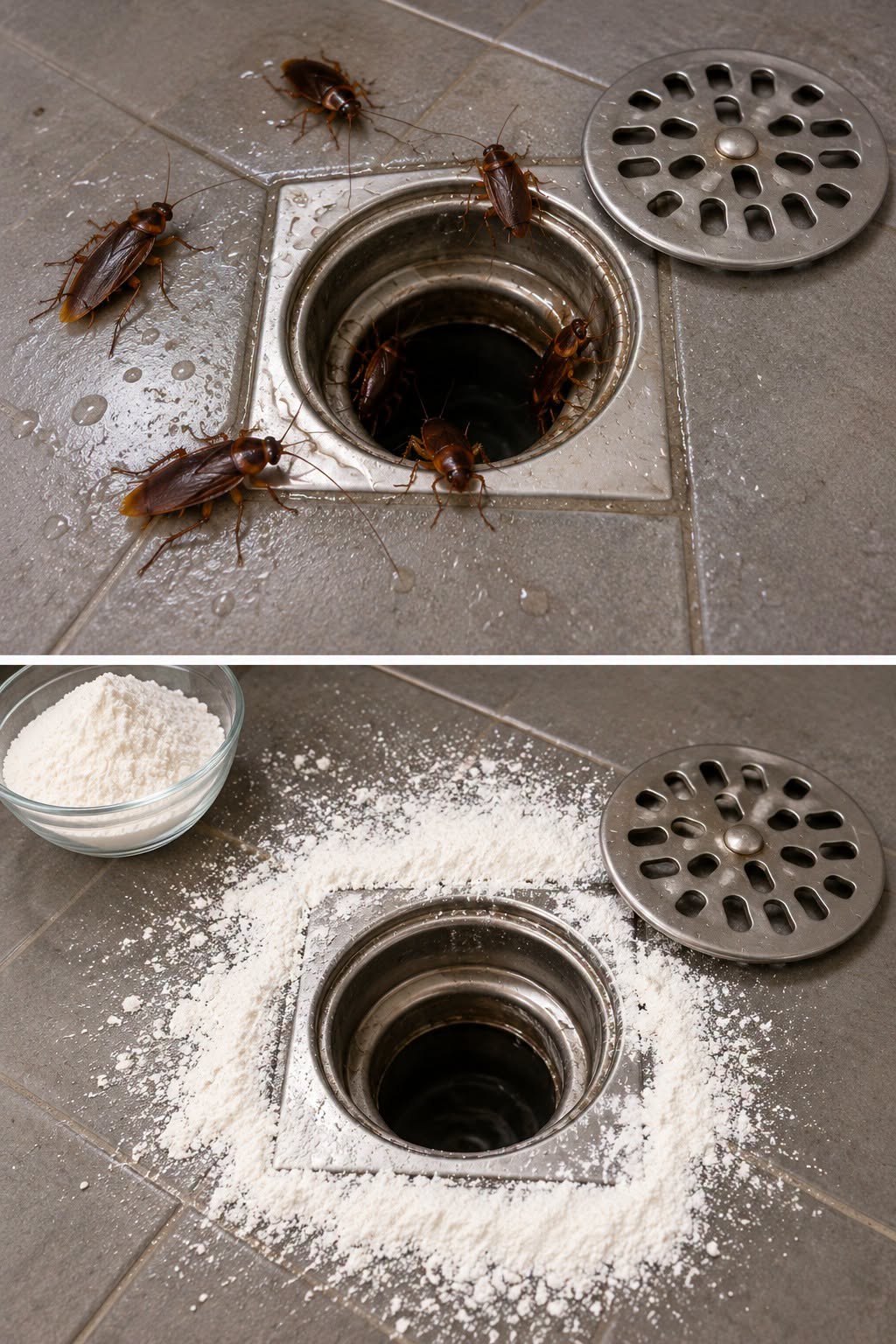
Finding cockroaches crawling out of your kitchen sink or bathroom drain can be an unpleasant surprise. These persistent pests can spread quickly when they have access to food, water, and safe hiding places. Fortunately, a few practical steps can help reduce their presence and make your home less attractive to them.
Although drains may provide moisture and access to hiding places, cockroaches do not always live inside plumbing pipes. They can also enter through gaps around pipes, wall openings, damaged seals, and other hidden spaces.
The good news? You can take action without relying on harsh chemicals everywhere in your home. From sealing entry points to improving sanitation and using appropriate pest-control products, here’s how to tackle the problem. 🏡
🚿 Why Do Cockroaches Appear Near Drains?
Cockroaches are attracted to environments that provide moisture, warmth, food, and shelter. Kitchens and bathrooms often offer all four.
Here are some common reasons you may see them near a drain:
- 💧 Moisture: Leaking pipes, damp cabinets, and standing water help cockroaches survive.
- 🍽️ Food residue: Grease, crumbs, and discarded food can provide a steady food source.
- 🌑 Dark hiding places: Spaces beneath sinks and behind appliances offer shelter.
- 🚪 Gaps around plumbing: Small openings around pipes can allow pests to move between rooms or enter from other areas.
- 🏢 Shared plumbing and walls: In apartments, cockroaches may travel between neighboring units through gaps and service openings.
Seeing one cockroach near a drain does not necessarily mean the drain itself is infested. However, repeated sightings may indicate a larger problem that needs attention.
🔎 Step 1: Inspect and Seal Possible Entry Points
Start by identifying where the cockroaches may be entering.
Use a flashlight to inspect the area beneath sinks, around plumbing connections, behind toilets, and near washing machines or dishwashers.
Look for:
- Cracks in walls and floors
- Gaps surrounding water pipes
- Damaged seals around fixtures
- Holes behind kitchen cabinets
- Leaking pipes or dripping taps
Seal suitable gaps around pipes with an appropriate sealant. For larger openings, use materials designed for the location and follow the manufacturer’s instructions.
Avoid stuffing steel wool into plumbing drains or areas where it could interfere with pipes. Repairing leaks is equally important because reducing moisture makes the environment less attractive to cockroaches.
🧽 Step 2: Keep Your Kitchen and Bathroom Clean
Good sanitation helps limit the food and water available to cockroaches. While cleaning alone may not eliminate an established infestation, it is an essential part of prevention.
Try these simple habits:
- 🍽️ Wash dishes promptly instead of leaving them overnight.
- 🧴 Wipe kitchen counters and stovetops to remove grease and food residue.
- 🗑️ Empty rubbish bins regularly and keep their lids closed.
- 🥣 Store flour, cereal, sugar, and pet food in tightly sealed containers.
- 💦 Fix dripping taps and dry wet areas beneath sinks.
- 🧹 Vacuum crumbs and clean behind large appliances when practical.
White vinegar can help with certain household cleaning tasks, but it should not be considered a reliable cockroach killer. The most important steps are removing food residue, reducing moisture, and blocking access to hiding places.
🚰 Step 3: Check Drains and Reduce Access
If cockroaches repeatedly appear near a kitchen or bathroom drain, check that the plumbing is working properly.
A drain’s water trap, or P-trap, normally holds water that helps block sewer gases and can restrict pest movement through the plumbing system. A dry, damaged, or incorrectly installed trap may need attention.
Here are some useful precautions:
- Clean drain covers and remove accessible debris according to the fixture manufacturer’s instructions.
- Make sure rarely used drains have functioning water traps.
- Use a suitable drain cover or stopper when appropriate for the fixture.
- Inspect seals around pipes and plumbing penetrations.
- Contact a plumber if you suspect a damaged trap, broken pipe, or sewer-related problem.
🧪 Does Baking Soda and Vinegar Get Rid of Cockroaches?
A popular household suggestion involves pouring baking soda followed by white vinegar into a drain. The mixture bubbles, which may help loosen some surface debris, but it is not a proven way to eliminate cockroaches or an infestation.
The reaction between baking soda and vinegar largely neutralizes the two ingredients. It should not be relied upon to disinfect the entire plumbing system or kill pests hiding in inaccessible spaces.
Never pour boiling water into a drain as a pest-control shortcut. Very hot water can damage some pipes, seals, or fixtures, and it is not a dependable way to eliminate cockroaches.
If you use a commercial drain cleaner, follow its label carefully. Never mix drain cleaners with vinegar, bleach, or other cleaning products.
🌿 Step 4: Understand How Diatomaceous Earth Works
Diatomaceous earth is a fine powder made from the fossilized remains of microscopic aquatic organisms called diatoms. Certain products are used to control crawling insects because the powder damages their protective outer layer and contributes to water loss.
However, not all diatomaceous earth products are suitable for pest control, and it is not a permanent or guaranteed solution to cockroaches.
If you choose to use it, keep these safety points in mind:
- Buy a product specifically labeled for indoor pest control and follow its directions.
- Do not put the powder inside drains, plumbing pipes, or wet areas.
- Avoid creating airborne dust or breathing in the powder.
- Keep children and pets away from treated areas as directed by the label.
- Never use pool-filter-grade diatomaceous earth as a substitute for a labeled pest-control product.
Diatomaceous earth works best when used in appropriate, dry locations where the target insects are likely to contact it. It loses effectiveness when wet, and careless application can create unnecessary dust exposure.
For many indoor cockroach problems, enclosed bait stations or gel baits labeled for cockroach control may be more practical. Keep all pest-control products away from food, dishes, and surfaces used to prepare meals.
🪤 Step 5: Use Baits and Monitor Cockroach Activity
If you continue seeing cockroaches, monitoring and targeted pest control can help you understand the size and location of the problem.
Consider these measures:
- Place sticky monitoring traps along walls, under sinks, and behind appliances, away from children and pets.
- Use cockroach bait stations or gel baits according to the product label.
- Keep baits away from food-preparation surfaces and inaccessible to children and animals.
- Avoid spraying insecticide directly over bait, as this can make the bait less attractive or interfere with its effectiveness.
- Check traps regularly to identify areas with the most activity.
Cockroaches may hide during the day, so repeated sightings at night can still indicate a problem. If you see many cockroaches, small young cockroaches, or droppings in several areas, a professional pest-control service may be necessary.
🏡 Step 6: Prevent Cockroaches From Returning
⏬Continued ⏬on the ⏬next ⏬page
