
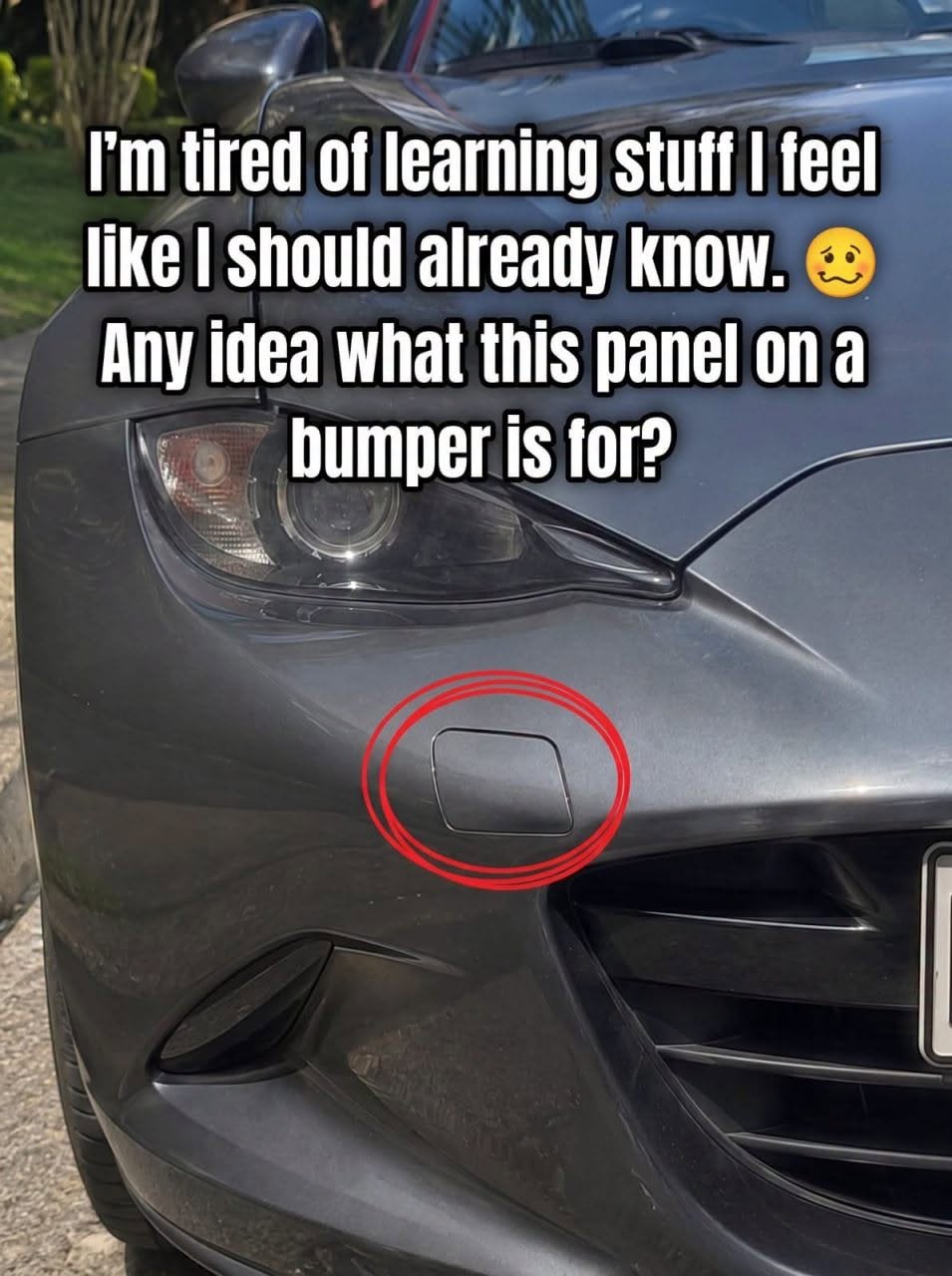
Have you ever noticed a small square or rectangular panel on the front or rear bumper of a car and wondered what it is for? At first glance, it may look like an ordinary piece of plastic trim, a decorative detail, or a cover with no particular purpose.
However, on many vehicles, this small panel hides an important feature: the mounting point for a removable towing eye or recovery hook.
Although it is easy to overlook, this little cover can become very useful when a vehicle needs to be recovered or moved under specific circumstances. Understanding what it does can help you recognize an important part of your car’s design and know where to look if you ever need it.
What Is the Small Panel on a Car Bumper?
The small panel is commonly known as a towing-eye cover or tow-hook cover. It is designed to conceal a threaded mounting point built into the vehicle’s structure behind the bumper cover.
The cover helps maintain the car’s clean appearance while protecting the opening from everyday dirt and debris.
Depending on the vehicle, you may find one of these panels on the front bumper, the rear bumper, or both. Its exact location and shape vary by manufacturer and model.
Some covers are square, while others are rectangular or shaped to follow the contours of the bumper.
What Is Behind the Cover?
Behind the small panel is typically a designated mounting point for a removable towing eye.
Many vehicles come with a metal towing eye that can be screwed into this mounting point when needed. The tool may be stored with the spare tire, jack, or other vehicle equipment, although its location varies.
The towing eye usually has a threaded end that fits into the mounting point. Once installed correctly, its loop provides a designated attachment point for certain recovery or towing operations.
This system allows manufacturers to keep the towing attachment hidden when it is not being used.
Why Do Cars Have a Removable Towing Eye?
There are several practical reasons for this design.
1. It Keeps the Bumper Looking Clean
A permanently exposed metal hook could affect the appearance of the vehicle. A small removable cover allows the bumper to retain a smooth, finished look.
When the towing eye is not required, the cover can be replaced, leaving the mounting point hidden from view.
2. It Protects the Mounting Point
The cover helps prevent dirt, road debris, and other contaminants from entering the opening.
Keeping the mounting area reasonably clean can make it easier to access when the towing eye is needed.
3. It Provides a Designated Recovery Attachment
If a vehicle becomes immobilized, the designated mounting point may provide an attachment location for an appropriate recovery operation.
However, the towing eye is not intended for every towing situation. Its permitted use depends on the vehicle manufacturer’s instructions, the towing eye’s design, and the type of recovery required.
How to Find and Open the Cover
If you want to identify this panel on your vehicle, start by examining the front and rear bumpers.
Look for a small cover that appears separate from the surrounding bumper material. Some covers have a subtle notch that allows them to be opened with an appropriate tool.
Before attempting to remove it, consult your owner’s manual. The recommended removal method varies between vehicles, and forcing the cover can damage the paint, clips, or bumper.
If the manual permits removal using a small tool, protect the surrounding paint with a soft cloth and follow the manufacturer’s directions.
Once the cover is removed, you may see the threaded mounting point for the towing eye.
How to Install a Removable Towing Eye
The exact installation procedure depends on the make and model of the vehicle, but many systems follow a similar process.
Step 1: Locate the towing eye.
Check the storage area specified in your owner’s manual. The towing eye may be supplied with the vehicle’s emergency tools.
Step 2: Open the correct bumper cover.
Use the procedure recommended by the manufacturer. Avoid prying against painted surfaces or forcing the cover.
Step 3: Align the threaded end.
Insert the towing eye into the designated opening and make sure the threads engage correctly.
Step 4: Tighten it as instructed.
Some towing eyes must be screwed in fully or tightened using a specified method. Follow the vehicle’s instructions rather than guessing how tight it should be.
Step 5: Confirm that the attachment is ready for its intended use.
Never use a towing eye that is damaged, incorrectly installed, or incompatible with the vehicle.
If you are unsure about installation or recovery procedures, contact roadside assistance or a qualified professional.
Is It Safe to Tow a Car Using This Hook?
A removable towing eye can serve as an approved attachment point for certain operations, but it should not automatically be treated as a universal towing hook.
There is an important difference between towing a vehicle on a road, pulling a disabled vehicle onto a recovery truck, and extracting a vehicle that is stuck in mud or snow.
Each situation places different forces on the vehicle.
A towing eye may be designed for particular recovery or towing loads, and using it incorrectly can damage the vehicle or cause serious injury.
Always check the owner’s manual for permitted uses, attachment locations, and restrictions. Never attach a recovery strap to an arbitrary part of the bumper, suspension, or bodywork.
What If Your Car Does Not Have This Panel?
⏬Continued ⏬on the ⏬next ⏬page
