
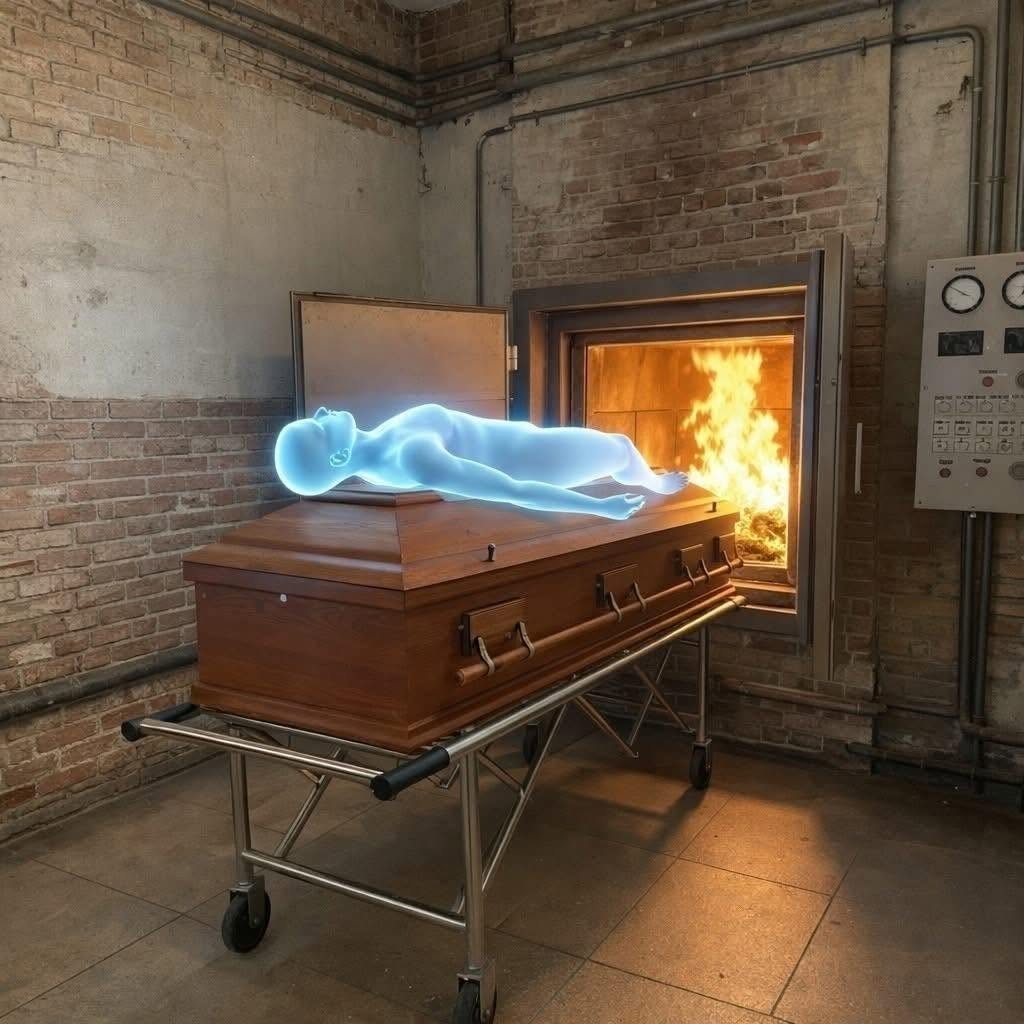
Introduction
Cremation is a subject that raises important questions for many Christians. When a loved one dies, families often face difficult decisions about burial, cremation, and how best to honor the person who has passed away. For some, the decision is influenced by family traditions or personal preferences. For others, it comes down to a deeper spiritual question: Does the Bible teach that cremation is a sin?
The answer is more nuanced than many people realize.
The Bible contains numerous accounts of people being buried after death, and traditional burial has been the most common practice throughout much of Christian history. However, Scripture does not contain a direct commandment that explicitly prohibits cremation for all believers. Understanding what the Bible says requires looking at its teachings about death, the human body, resurrection, and the hope Christians have in eternal life.
Christians also belong to different denominations, and their interpretations of cremation can vary. Some strongly prefer traditional burial, while others consider cremation an acceptable choice when approached with respect for the deceased and faith in God.
To understand the issue more clearly, let’s examine the relevant biblical passages and the spiritual principles behind them.
1. Does the Bible Explicitly Forbid Cremation?
One of the most important points to understand is that the Bible does not contain a direct statement saying, “You shall not cremate the dead.”
There is no universal biblical commandment that explicitly declares cremation a sin in every circumstance.
Instead, the Bible describes several burial practices and provides accounts of bodies being burned in particular situations. These passages must be interpreted within their historical and spiritual contexts rather than treated as a single, straightforward rule about modern cremation.
What Does Scripture Say About Burial?
Burial was a common way of honoring the dead in biblical times. Abraham buried Sarah, and Abraham himself was later buried by his sons. Genesis 23 describes Sarah’s burial, while Genesis 25:9 describes Abraham’s burial.
These accounts show that burial was an established and respected practice among God’s people.
In the New Testament, Jesus was also buried after His crucifixion. According to Matthew 27:57–60, Joseph of Arimathea placed Jesus’ body in a new tomb.
For many Christians, Jesus’ burial serves as an important example of treating the human body with dignity and respect.
However, the fact that burial was the customary practice does not automatically mean that every other method of handling the body is forbidden.
Image suggestion: An open Bible beside a simple arrangement of white lilies, symbolizing faith, remembrance, and the hope of eternal life.
2. What Does the Bible Say About Bodies Being Burned?
Several passages in the Bible mention the burning of human remains. These accounts are sometimes used in discussions about whether cremation is acceptable for Christians.
However, it is important to distinguish between burning a body as part of a funeral practice and burning associated with punishment, warfare, or judgment.
The Story of King Saul
In 1 Samuel 31:11–13, the men of Jabesh-gilead recovered the bodies of Saul and his sons after they had been killed in battle. They burned the bodies, buried the bones, and mourned and fasted for seven days.
This passage is particularly relevant because it describes the treatment of the bodies of Israel’s fallen king and his sons.
The text does not explicitly condemn the men for their actions. Their conduct is presented in the context of recovering the bodies after a military defeat and giving them a respectful burial.
Some readers understand this passage as evidence that burning a body was not automatically considered sinful in every circumstance.
Nevertheless, the passage does not establish a universal rule approving every form of cremation. It describes a specific event in a particular historical setting.
Other Biblical References to Burning
Amos 2:1 describes a judgment against Moab for burning the bones of the king of Edom into lime. The passage concerns an act of hostility and dishonor, rather than a clear prohibition of modern cremation as a funeral choice.
Similarly, other biblical references to burning bodies occur in contexts of punishment, warfare, or judgment.
These passages should not be treated as direct statements that every Christian who chooses cremation is committing a sin.
3. Does Cremation Affect the Christian Belief in Resurrection?
One of the biggest concerns Christians express about cremation is whether the body can still be resurrected.
The Christian belief in resurrection is central to the New Testament. First Corinthians 15 discusses the resurrection of the dead and explains that the body that is raised will be transformed.
In 1 Corinthians 15:42–44, the apostle Paul compares the body that is buried with the body that will be raised, describing a transformation from corruption to incorruption.
This passage is often important in discussions about cremation because it emphasizes God’s power to bring new life.
Is God Limited by What Happens to the Body?
Christian teaching generally holds that God’s power is not limited by the physical condition of a person’s remains.
Over time, buried bodies naturally decompose. Some people die in fires, at sea, or in other circumstances in which their remains cannot be recovered. These situations do not necessarily prevent Christians from believing in God’s promise of resurrection.
For many Christians, the central point is that resurrection depends on God’s power, not on the preservation of a person’s physical remains.
Therefore, cremation does not automatically mean that a person cannot be resurrected according to the Christian understanding of God’s power.
Image suggestion: A peaceful sunrise over a cemetery with a cross in the distance, representing hope, renewal, and eternal life.
4. Why Do Some Christians Prefer Traditional Burial?
Although the Bible does not explicitly prohibit cremation in every circumstance, many Christians continue to prefer traditional burial.
This preference is often based on biblical examples, historical tradition, and the symbolism associated with placing the body in the ground.
Burial as a Sign of Respect
Traditional burial provides a physical place for family members to visit, remember their loved one, and express their grief.
For many believers, it also reflects the dignity of the human body and the hope of resurrection.
The burial of Jesus is particularly significant in Christian faith. His death, burial, and resurrection form the foundation of the Christian message described in 1 Corinthians 15:3–4.
Some Christians believe that following the traditional practice of burial is the most appropriate way to honor this pattern.
The Influence of Christian Tradition
Christian attitudes toward cremation have varied throughout history and across different cultures.
In many Christian communities, burial became the customary funeral practice, and cremation was sometimes associated with religious beliefs that differed from Christianity.
As a result, some churches developed strong preferences for burial.
Today, Christian denominations do not all approach cremation in the same way. Some encourage burial, while others permit cremation under certain conditions.
It is therefore important to distinguish between a church’s traditional preference and a direct biblical commandment.
5. Is Cremation a Sin in Catholic, Protestant, and Orthodox Christianity?
Christians do not all interpret funeral practices in exactly the same way. Understanding these differences can help families make informed decisions.
Catholic Christianity
The Catholic Church permits cremation, provided that it is not chosen as a denial of Christian beliefs concerning the resurrection of the body.
Catholic teaching generally prefers burial because of its historical and religious significance. When cremation is chosen, the Church requires that the cremated remains be treated respectfully and ordinarily kept together in a sacred place, such as a cemetery or columbarium.
Scattering ashes or keeping them in a manner that contradicts Catholic teaching is generally not permitted under current Catholic guidance.
Families should consult their parish priest for specific instructions and pastoral support.
Protestant Christianity
Protestant views on cremation vary by denomination and individual congregation.
Many Protestant churches accept cremation, emphasizing that the Bible does not explicitly prohibit it and that God’s promise of resurrection does not depend on the physical preservation of the body.
Other Protestant communities strongly prefer burial because of biblical tradition and its symbolism.
For this reason, Christians who belong to a particular church may wish to speak with their pastor before making funeral arrangements.
Eastern Orthodox Christianity
⏬Continued ⏬on the ⏬next ⏬page
