
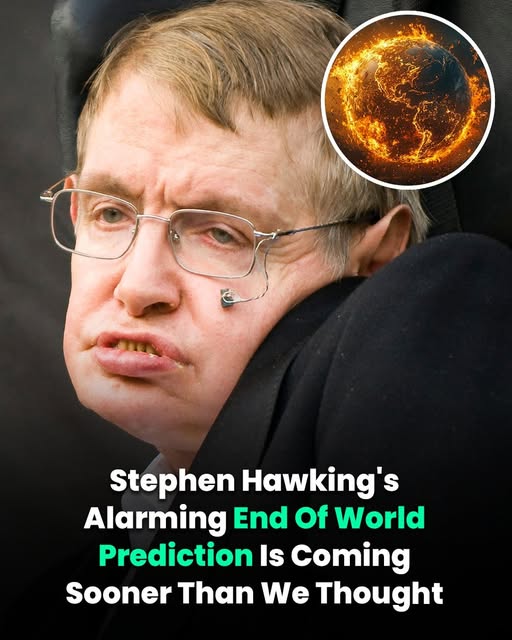
Renowned theoretical physicist people,”Stephen Hawking”,”british physicist and cosmologist” once delivered a stark warning about the future of humanity, emphasizing that if population growth and energy consumption continue to rise at the present rate, the Earth could become increasingly inhospitable and potentially unlivable by the year 2600. Speaking at the organization,”Tencent WE Summit”,”technology conference, China” in front of a global audience of scientists, technologists, and policymakers, Hawking painted a sobering picture of the consequences of unchecked human activity on our planet. He underscored that our species faces a set of intertwined challenges that demand immediate attention and thoughtful action.
Hawking explained that the combination of accelerating population growth and ever-increasing energy demands could push Earth’s environmental systems to critical tipping points. “The more people there are, the more energy is consumed, the more resources are exploited, and the faster the environment deteriorates,” he cautioned. According to his analysis, by 2600, if these trends are allowed to continue without major intervention, vast areas of the planet could experience extreme temperatures, rising sea levels, and resource shortages, making them nearly impossible to inhabit. Overcrowding in habitable regions would intensify, potentially leading to social unrest, widespread migration pressures, and increased competition for dwindling resources.
Beyond population and energy, Hawking highlighted a range of other existential threats that humanity must address. Climate change, he noted, remains one of the most immediate dangers, capable of altering ecosystems, disrupting agriculture, and intensifying natural disasters. He also warned about the potential devastation from nuclear warfare, which could have catastrophic consequences not only for the directly affected regions but for the global climate through phenomena such as nuclear winter. Global pandemics, a risk that has become increasingly tangible in recent years, were also cited as a serious concern, particularly in an interconnected world where diseases can spread rapidly across continents. Finally, Hawking pointed to the rise of artificial intelligence, stressing that if advanced AI systems are developed or deployed without careful oversight, they could inadvertently act in ways that threaten human safety or destabilize societal structures.
