
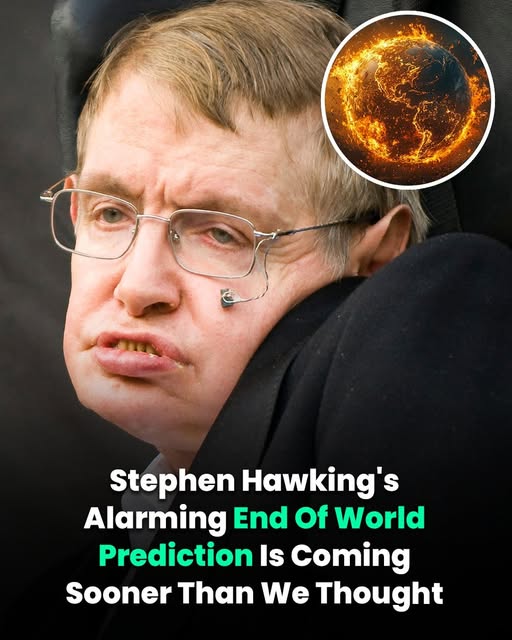
A key point Hawking made during his talk was the interconnectedness of these threats. “No single problem exists in isolation,” he said. “Population growth, energy consumption, climate change, pandemics, and technological risks all interact in ways that can amplify the consequences of each.” For example, increased energy use can accelerate climate change, which in turn can lead to agricultural disruptions, resource scarcity, and potential social unrest—making the world less resilient in the face of other challenges such as disease outbreaks or political instability.
Despite the gravity of his warnings, Hawking emphasized that these outcomes are not inevitable. He argued that scientific and technological progress must be paired with responsible global governance, international cooperation, and long-term thinking. Policies that promote sustainable energy, population stabilization, and environmental conservation are essential to avoid the worst-case scenarios he described. Hawking also called for investments in education, scientific research, and the development of technologies that could mitigate these risks, such as renewable energy systems, climate adaptation strategies, and global early-warning networks for pandemics and disasters.
Throughout his career, Hawking consistently highlighted the moral and practical responsibility of humanity to act wisely. He urged leaders, scientists, and citizens alike to recognize the finite limits of our planet and the fragile balance of the ecosystems on which all life depends. According to him, ignoring these warnings could lead to outcomes that are not only environmentally disastrous but socially and politically destabilizing, affecting countless generations yet to come.
Hawking’s ultimate message was a call for proactive stewardship of Earth: humanity must change its trajectory, prioritize sustainability, and think beyond immediate gains to safeguard the long-term survival of civilization. By taking collective action today—through policy, innovation, and global collaboration—humans can still avert the dire conditions he predicted for 2600. He concluded with a reminder that the future of the planet, and of humanity itself, depends on the choices made in the present: careful planning, responsible resource management, and respect for the natural world are not optional but essential.
