
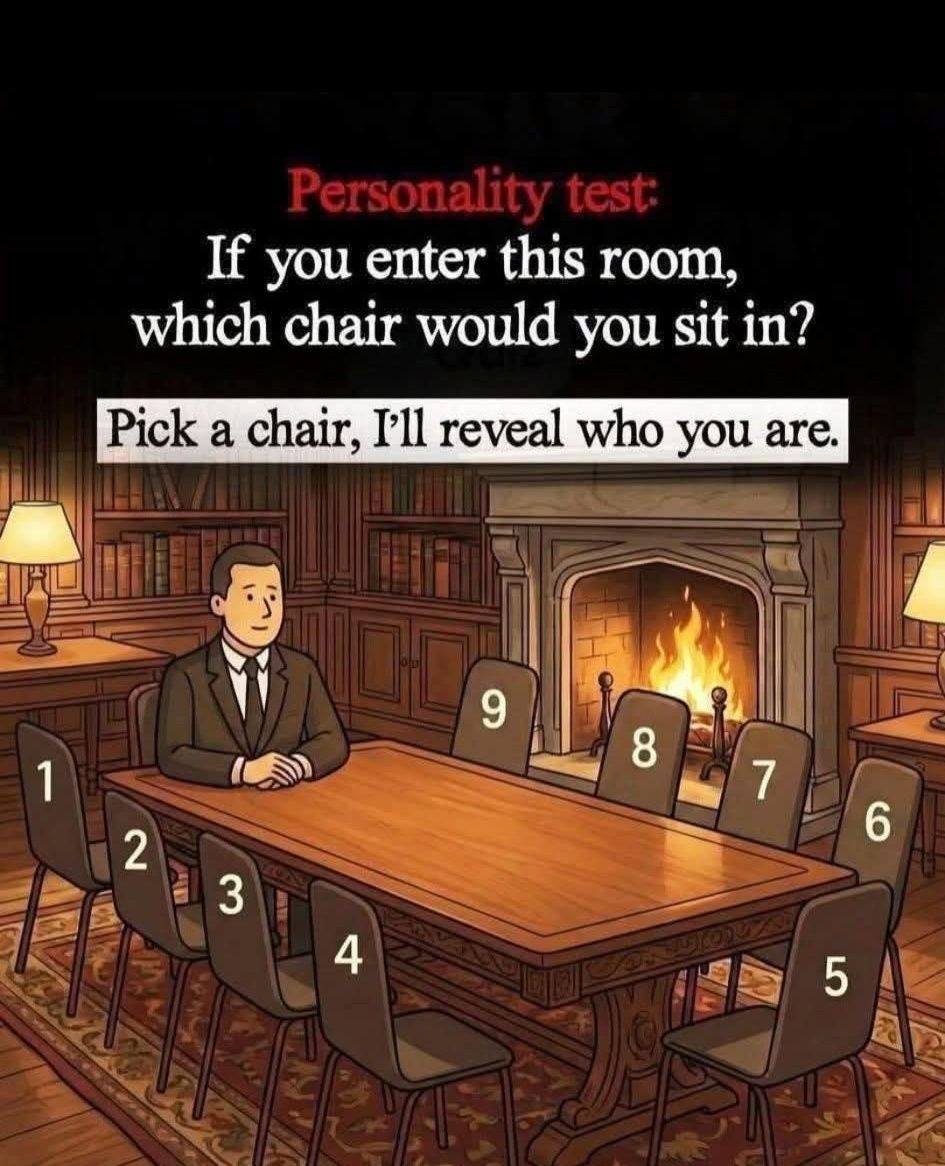
Walk into a wedding reception.
Some rush to sit with familiar friends. Others deliberately choose a mixed table to meet new people.
Extroverts may gravitate toward central tables near the dance floor. Introverts may scan for quieter corners.
And sometimes, people wait — reading the room before committing.
The act of choosing a seat becomes a small act of self-definition.
Digital Seating: The Modern Equivalent
In virtual meetings, seating has evolved into screen positioning.
Who appears in the top row? Who speaks first? Who keeps their camera on?
Even in online environments, humans create hierarchies. Spotlight features, pinned speakers, and grid layouts replicate physical dynamics.
Where you “sit” digitally still shapes perception.
Cultural Differences in Seating Norms
Seating traditions vary across cultures.
In some East Asian business settings, hierarchy dictates precise seating arrangements based on rank. In certain Middle Eastern gatherings, hospitality customs determine where guests of honor sit.
Understanding these norms is essential in international diplomacy and global business.
A misplaced seat can unintentionally signal disrespect.
The Courage to Sit Differently
There are moments in life when choosing a different seat changes everything.
The shy student who moves to the front.
The junior employee who sits at the table instead of against the wall.
The guest who joins strangers instead of staying safe.
Seating can become symbolic of stepping forward.
Sometimes growth begins with a chair.
Where Will You Sit in Life?
Beyond rooms and furniture, the question becomes metaphorical.
Will you sit on the sidelines — observing?
Will you sit at the table — participating?
Will you stand — leading?
Life constantly presents figurative seating charts:
In conversations about justice.
In moments requiring courage.
In opportunities for leadership.
Passivity has a seat. So does initiative.
The Science of Corners and Walls
Researchers have found that people often prefer seats with a wall behind them. This reduces vulnerability and increases perceived control.
Restaurants often design booths along walls because customers feel more comfortable there. Cafés place window seating for people-watchers.
Even office layouts reflect these insights. Corner offices are prized not just for size, but for the dual-window perspective — vision in two directions.
Humans crave vantage points.
When You Don’t Get to Choose
Not every seating choice is voluntary.
Classroom charts. Assigned airline seats. Jury boxes. Waiting rooms.
When choice is removed, reactions vary. Some accept it calmly. Others feel unsettled.
Choice itself carries psychological weight. Losing it reminds us how much autonomy matters.
The Leadership Seat
Leadership isn’t always about sitting at the head of the table.
Sometimes the most effective leaders move around — refusing fixed positions. They reduce distance, blur hierarchy, and sit among their teams.
Physical placement can reinforce or dismantle power structures.
The question becomes not just “Where will you sit?” but “What does your seat communicate?”
A Final Reflection
Next time you walk into a room, pause.
Notice your instinct.
Do you drift toward familiarity? Toward authority? Toward invisibility?
There’s no universally correct answer. But there is awareness.
Because where you sit reflects how you see yourself — and how you want others to see you.
The chair you choose might seem insignificant.
Yet in that quiet decision lies confidence, caution, ambition, belonging, or boldness.
So here’s the question again:
When the doors open, the room fills, and the choices are yours…
