
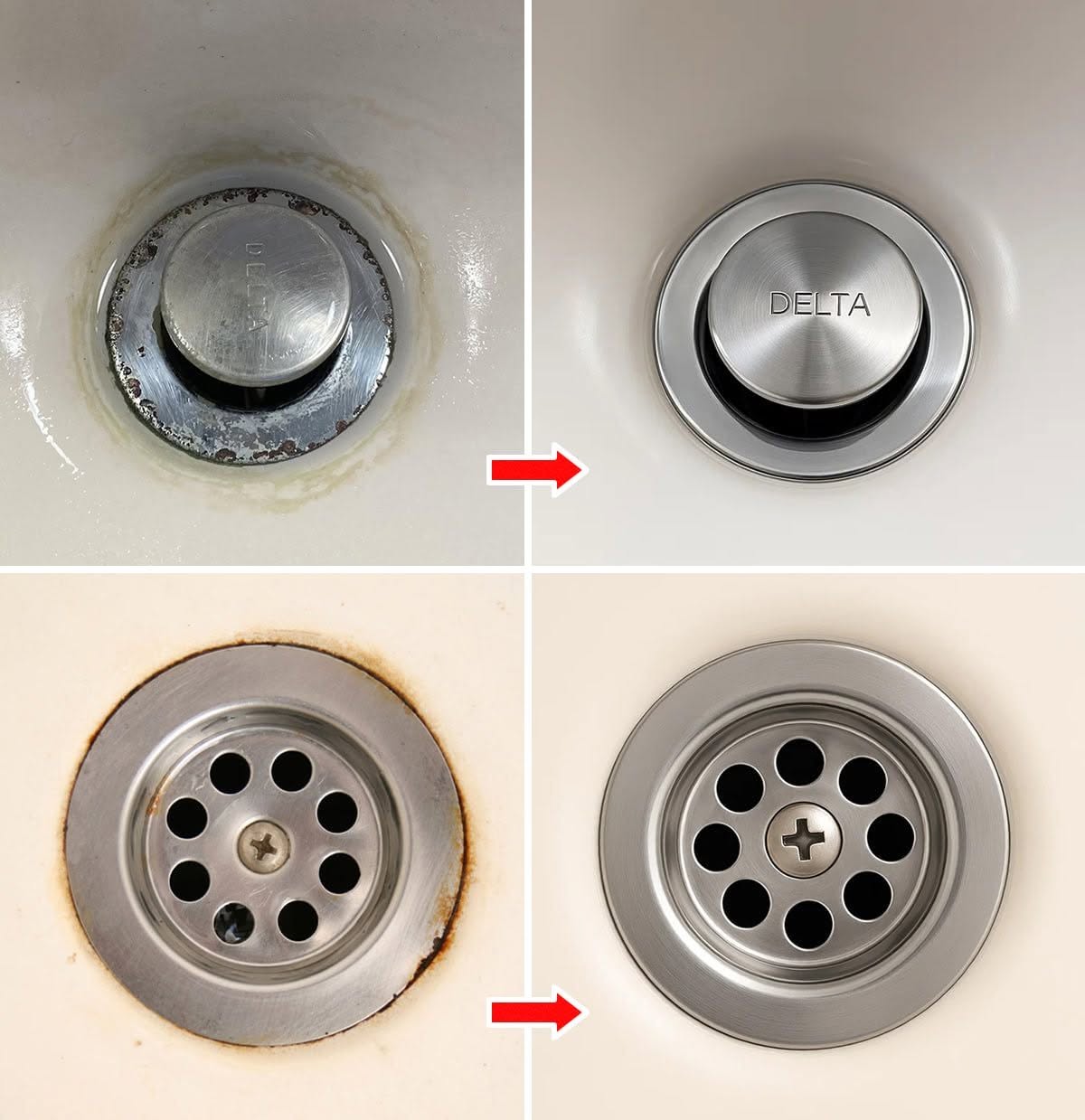
Have you noticed a dark, dirty-looking ring forming around your kitchen or bathroom faucet? Even when the sink looks clean, those stubborn black or brown marks around the base of the tap can make the entire area look neglected.
The good news is that these stains can often be removed with a few simple cleaning techniques and everyday household supplies. You may not need harsh bleach or expensive specialty cleaners to restore a cleaner appearance.
Before choosing a cleaning method, however, it helps to understand what causes these marks. In some cases, they are caused by mineral deposits and soap residue. In others, the dark discoloration may come from mold, mildew, worn sealant, or corrosion.
Here are practical ways to clean around your faucets, prevent new stains, and keep your sink looking fresh. 🧽
🚰 What Causes Dark Rings Around Faucets?
Dark rings around faucets are common in kitchens and bathrooms, especially in areas where water frequently splashes and remains around the base of the tap.
Several factors can contribute to their appearance.
1. Hard Water and Limescale
Hard water contains dissolved minerals, particularly calcium and magnesium. When water evaporates around a faucet, these minerals can remain behind and form white, chalky deposits.
Over time, mineral buildup can trap dirt and soap residue, creating a stained or discolored ring.
2. Soap Residue and Dirt
Soap, toothpaste, cooking grease, and everyday grime can collect around the faucet base. When combined with mineral deposits, they can form a stubborn layer that ordinary wiping may not remove.
3. Mold and Mildew
The damp area beneath or around a faucet can encourage mold or mildew growth, particularly when moisture remains trapped under an old seal.
Dark marks that return quickly or appear alongside a musty smell may require more than routine descaling.
4. Damaged Sealant or Corrosion
Sometimes, the stain is not simply dirt. Old silicone sealant can become discolored, and damaged metal finishes may develop dark spots or corrosion.
If the surface is pitted, peeling, or permanently discolored, cleaning may not restore its original appearance.
🧽 Method 1: Clean the Area With White Vinegar
White vinegar can help dissolve many mineral deposits caused by hard water. It is particularly useful for compatible surfaces with light limescale buildup.
What You Need
- White vinegar
- A soft cleaning cloth
- A small bowl
- Clean water
- A dry microfiber cloth
Instructions
- Mix equal parts white vinegar and water in a small bowl.
- Dip a soft cloth into the solution and wring out the excess liquid.
- Place the damp cloth over the mineral ring for a few minutes.
- Gently wipe the area to loosen the deposits.
- Rinse thoroughly with clean water.
- Dry the faucet base with a microfiber cloth.
If the deposits remain, repeat the process only if the faucet manufacturer’s care instructions allow it.
Important: Do not leave vinegar on the surface for 30 minutes automatically. Prolonged acid exposure can damage certain finishes and materials. Avoid vinegar on marble, limestone, travertine, and other acid-sensitive natural stone.
🍋 Method 2: Use Lemon Carefully
Lemon juice contains citric acid, which may help loosen some mineral deposits. However, it is not suitable for every faucet finish or countertop material.
How to Try It
- Check the manufacturer’s cleaning recommendations first.
- If the surface is compatible, dilute a little lemon juice with water.
- Apply it briefly with a soft cloth.
- Wipe gently without scrubbing aggressively.
- Rinse thoroughly and dry the area.
Avoid lemon juice on natural stone, delicate finishes, or surfaces for which acidic cleaners are not recommended. Lemon is not a reliable disinfectant for every type of household contamination.
🫧 Method 3: Try Mild Dish Soap and Warm Water
If the dark ring is caused mainly by soap residue, grease, or ordinary grime rather than limescale, a mild detergent may be the best place to start.
Instructions
- Add a few drops of dishwashing liquid to a bowl of warm water.
- Dip a soft microfiber cloth into the mixture.
- Wipe around the faucet base and nearby sink surface.
- Use a soft toothbrush to reach narrow gaps, applying gentle pressure.
- Rinse with clean water.
- Dry thoroughly.
This method is generally a safer first step because it avoids strong acids and abrasive cleaners.
🪥 Method 4: Use a Soft Toothbrush for Tight Corners
The narrow seam where a faucet meets the sink can collect grime that a regular cloth cannot reach.
A clean, soft-bristled toothbrush can help loosen the buildup without scratching many common surfaces.
Step-by-Step Guide
- Wet the toothbrush with warm water.
- Add a small amount of mild dish soap.
- Gently brush around the base of the faucet.
- Wipe away the loosened dirt with a damp cloth.
- Rinse and dry the area completely.
Avoid stiff brushes, metal scouring pads, and abrasive powders, which can scratch chrome plating and other delicate finishes.
🧂 Method 5: What About Baking Soda?
Baking soda is a mild abrasive that may help remove some surface grime. However, it can scratch delicate or polished finishes if rubbed too hard.
If the faucet manufacturer permits its use, mix a small amount with water to make a soft paste. Test it on an inconspicuous area first, then gently wipe the stain with a soft cloth.
Do not use aggressive scrubbing, and rinse thoroughly afterward.
For delicate finishes, painted faucets, brushed metal, or surfaces with a special coating, mild soap and water are usually a better choice.
🦠 What If the Dark Ring Is Mold?
If the discoloration is concentrated in the sealant around the faucet, appears fuzzy, or keeps returning despite cleaning, mold or mildew may be involved.
Try these steps:
- Clean the area with a suitable household cleaner according to its label.
- Dry the surface completely.
- Check whether the silicone sealant is cracked, peeling, or separating from the sink.
- If discoloration remains embedded in the sealant, consider having the damaged sealant replaced.
Do not simply cover moldy sealant with a fresh layer of silicone. The underlying area should be properly cleaned and dried first.
If the affected area is extensive, keeps returning, or appears to be associated with a leak, investigate the moisture source and consider professional assistance.
Safety tip: Never mix vinegar or lemon juice with bleach. Never mix different cleaning products unless their labels explicitly permit it.
🚿 How to Prevent Dark Rings From Returning
 Continued on the next page
