
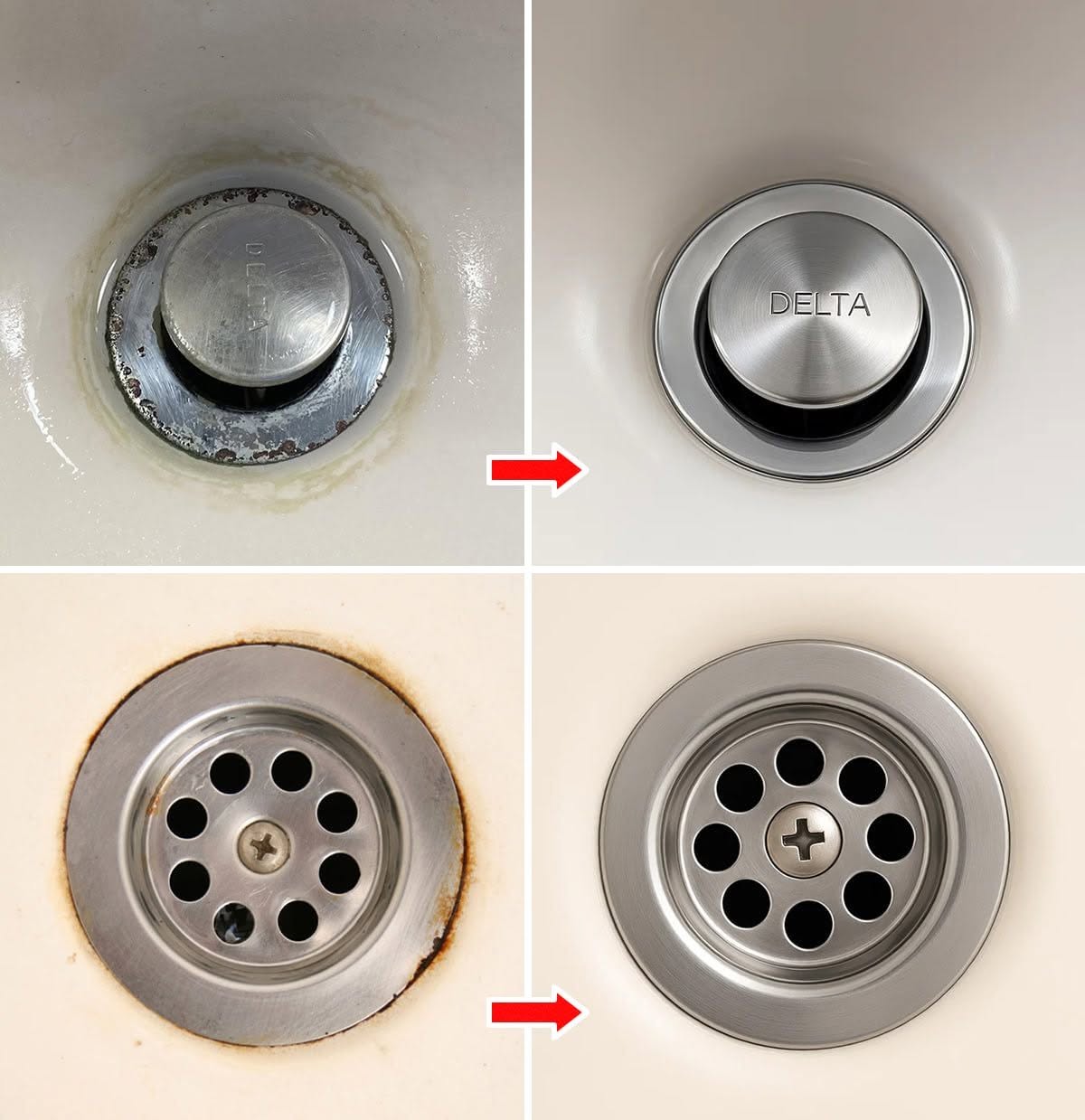
Once the faucet area is clean, a few small habits can help prevent new stains from forming.
1. Wipe Away Water After Use
Use a soft, dry cloth to remove water droplets around the faucet. This reduces the mineral residue left behind when water evaporates.
2. Clean Regularly
Wipe around the faucet base a few times each week, or more often if the area becomes dirty quickly.
Regular light cleaning is usually easier than removing a thick layer of buildup.
3. Fix Leaks Promptly
A dripping faucet or leaking connection keeps the surrounding area damp and can contribute to staining and mold growth.
Repair leaks as soon as possible.
4. Use the Right Cleaner for Your Faucet
Chrome, brushed nickel, stainless steel, brass, matte black finishes, and coated faucets may have different care requirements.
Check the manufacturer’s recommendations before using acidic cleaners, abrasive products, or strong chemicals.
5. Keep the Seal Around the Faucet in Good Condition
Inspect the area where the faucet meets the sink. If the seal is damaged or water repeatedly collects underneath it, repair the underlying issue rather than relying on surface cleaning alone.
❓ Frequently Asked Questions
1. Why does a black ring form around my faucet?
It may be caused by mineral deposits mixed with soap residue and dirt. Mold, damaged sealant, or corrosion can also create dark discoloration.
2. Does white vinegar remove limescale?
White vinegar can dissolve many mineral deposits on acid-compatible surfaces. It should not be used on acid-sensitive natural stone or finishes that the manufacturer says must avoid acidic cleaners.
3. Can I leave vinegar around the faucet overnight?
No. Long exposure to acidic cleaners may damage some metals, coatings, sealants, and nearby surfaces. Follow the product and faucet manufacturer’s instructions, and rinse the area thoroughly.
4. Is lemon juice better than vinegar?
Neither is universally better. Both are acidic and may help loosen certain mineral deposits, but their suitability depends on the material being cleaned. Mild dish soap and water are often the safest starting point.
5. How can I tell whether the stain is mold or limescale?
Limescale often appears chalky, crusty, or whitish before dirt darkens it. Mold may look like dark spots in damp seams and may return if moisture remains. Appearance alone cannot always identify the cause.
6. What should I do if the stain will not come off?
Stop scrubbing aggressively. The discoloration may be embedded in old sealant or caused by corrosion or a damaged finish. Check the manufacturer’s advice or consult a professional if needed.
7. Can I use bleach to clean around the faucet?
Bleach is not usually necessary for ordinary limescale or soap residue. If a disinfectant is needed, use a suitable product according to its label and never mix bleach with vinegar, lemon juice, ammonia, or other cleaners.
✨ Final Thoughts
Dark rings around faucets can make an otherwise clean sink look dirty, but the solution often begins with identifying the cause.
For everyday grime, start with mild dish soap and warm water. For compatible surfaces with mineral deposits, a brief application of diluted white vinegar may help. Lemon juice and baking soda are not universal solutions, so always check the surface material before using them.
The most effective long-term strategy is simple: clean regularly, dry the area after use, repair leaks, and protect the faucet’s finish.
With a little routine maintenance, you can keep the area around your kitchen or bathroom faucet cleaner and help prevent stubborn rings from returning. 🧼✨
