
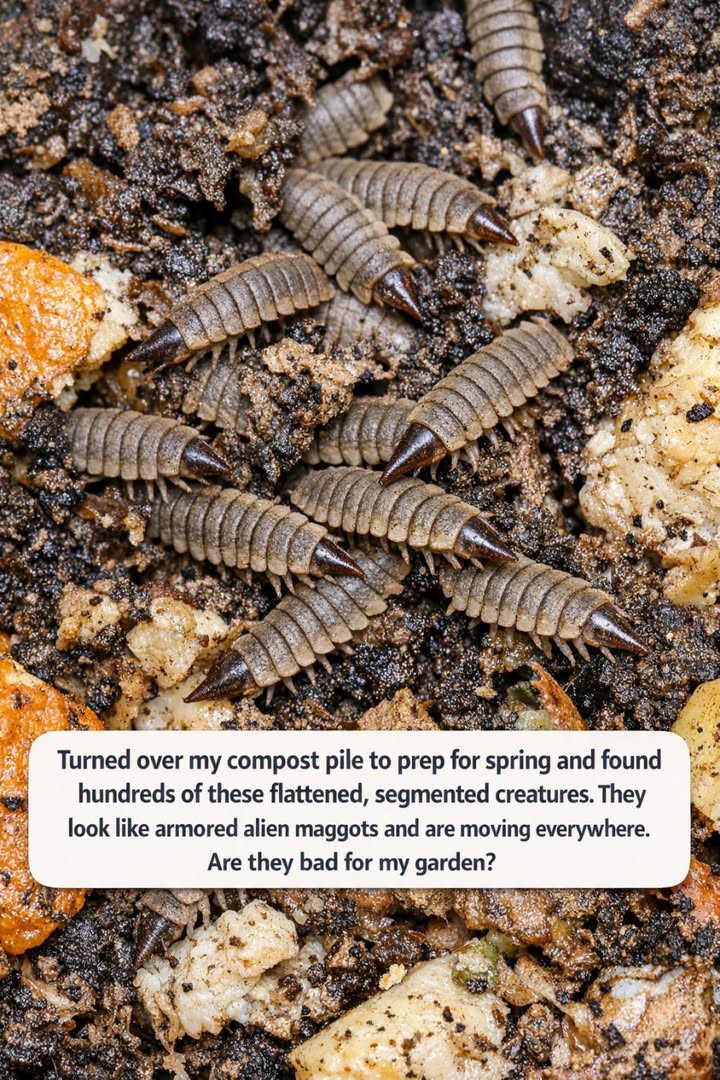
As the chill of winter begins to wane, gardeners eagerly anticipate the onset of spring. It’s the perfect time to prepare your garden for the upcoming growing season, and a well-maintained compost pile is integral to ensuring rich, fertile soil. However, as you turn over your compost in preparation, you may discover an unexpected surprise: hundreds of segmented, flattened creatures that resemble something out of a science fiction novel.
While these critters may initially appear alarming—akin to armored alien maggots—they are actually a fascinating and beneficial presence in your compost pile. Before you panic, it’s important to understand what these creatures are, their role in your compost ecosystem, and how they affect your garden’s health and productivity.
1. Meet Your “Armored Alien Maggots”: What They Actually Are
The creatures you’ve encountered are most likely the larvae of the Black Soldier Fly (Hermetia illucens). These larvae are known for their distinctive appearance: they are usually dark brown to black, with a flattened, segmented body that can grow up to 1 inch (2.5 cm) in length. Their tough exoskeleton gives them a somewhat armored look.
Black Soldier Fly larvae are primarily found in compost piles that contain a high amount of nitrogen-rich materials, such as food scraps. They thrive in the warm, moist environments typical of well-maintained compost heaps. Despite their alien-like appearance, these larvae are not only harmless but are actually beneficial to your composting efforts.
2. How To Positively Identify Black Soldier Fly Larvae In Your Compost
To confirm that the creatures in your compost are indeed Black Soldier Fly larvae, look for several distinguishing characteristics. These larvae are typically cream to dark brown in color and have a cylindrical, segmented body. Their mouthparts are located on the narrower end of their body, and they lack legs.
Another identifying feature is their movement. Black Soldier Fly larvae are quite active, wriggling vigorously when disturbed. They also have a unique spiracle pattern at their rear end, which aids in their identification. Observing these traits can help you differentiate them from other compost-dwelling insects.
3. Are They Harmful Or Helpful? The Real Impact On Your Garden
Black Soldier Fly larvae are not harmful to your garden; in fact, they are beneficial decomposers. They feed voraciously on organic waste, accelerating the decomposition process in your compost pile. By breaking down organic matter more quickly than other composting insects, they help produce nutrient-rich compost in a shorter amount of time.
Moreover, the presence of Black Soldier Fly larvae can reduce the number of houseflies and other pests in your compost, as they outcompete these insects for resources. This can lead to a cleaner, less odorous compost pile, making them a valuable ally in organic waste management.
4. Why Black Soldier Fly Larvae Love Your Compost Pile
Black Soldier Fly larvae are attracted to compost piles because they provide the ideal environment for growth and development. These larvae thrive in warm, moist conditions with an abundance of organic material to feed on. Compost piles rich in nitrogen, such as those containing food scraps, attract them due to the ample nutrients available.
The larvae’s ability to rapidly consume and break down organic waste makes them an efficient component of the composting process. By transforming waste into valuable compost, they play a crucial role in nutrient cycling and soil fertility.
5. What Their Presence Says About Your Compost’s Health
The presence of Black Soldier Fly larvae in your compost indicates a healthy, active decomposition process. Their preference for nutrient-rich, warm environments suggests that your compost pile is functioning optimally, with the right balance of moisture, temperature, and organic material.
If you observe a large number of these larvae, it may be a sign that your compost pile is particularly rich in nitrogenous material. This can be beneficial for composting, as the larvae help to balance the carbon-to-nitrogen ratio by breaking down excess organic matter.
6. The Incredible Benefits: From Faster Decomposition To Richer Soil

