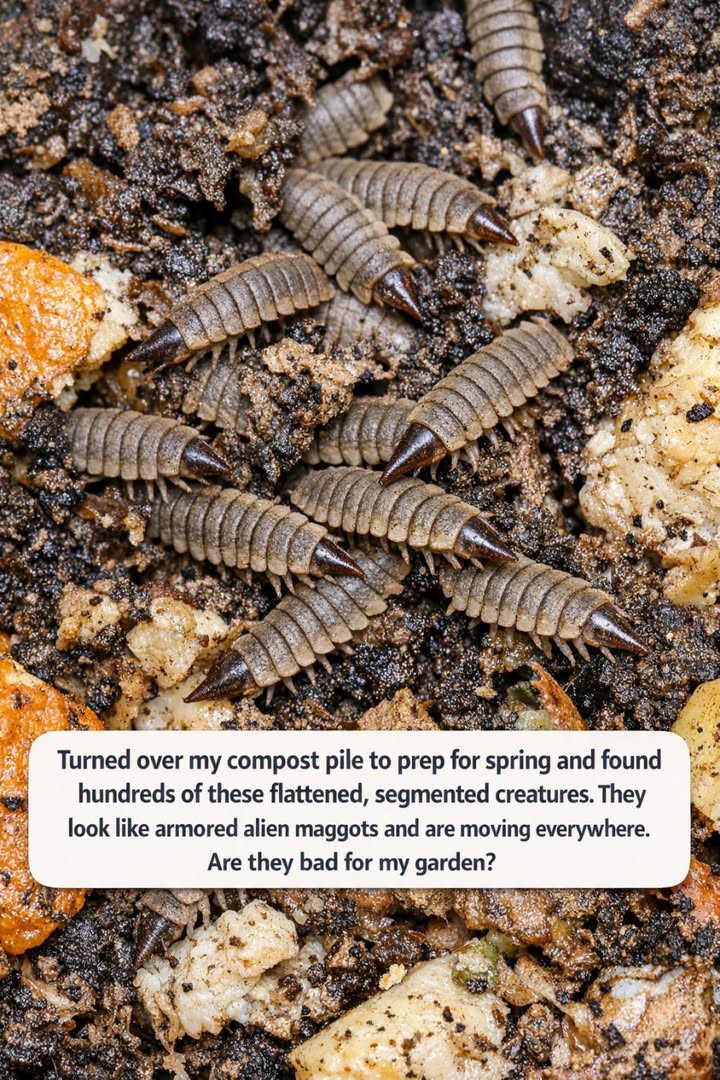
Additionally, the larvae contribute to the production of high-quality compost. As they break down organic matter, they release nutrients back into the compost, enhancing its nutrient profile. This results in a richer, more fertile soil amendment that can improve plant growth and yield.
7. When (If Ever) You Should Be Concerned About Their Numbers
While Black Soldier Fly larvae are generally beneficial, an overwhelming population could indicate an imbalance in your compost pile. A very high concentration of larvae may suggest an excess of food scraps or other nitrogen-rich materials, which could slow the overall composting process by reducing aeration and increasing moisture.
If you notice a large number of larvae, consider adjusting the composition of your compost by adding more carbon-rich materials, such as dried leaves or straw, to restore balance and improve aeration.
8. Simple Ways To Manage Or Reduce A Larvae Explosion
If you find the number of Black Soldier Fly larvae in your compost pile to be excessive, there are several strategies to manage their population. Start by aerating your compost regularly to reduce moisture levels and improve decomposition. Turning the pile can also help distribute materials more evenly.
Additionally, adjust the balance of your compost by adding more carbon-rich materials, which can help reduce the number of larvae. Covering your compost pile with a breathable lid can also deter female Black Soldier Flies from laying eggs, thereby controlling the larvae population.
9. How To Work Around Them When Planting And Using Finished Compost
When it comes time to use your finished compost, the presence of Black Soldier Fly larvae should not pose a problem for planting. By the time the compost is mature and ready for use, most larvae will have pupated and left the pile.
If you encounter any remaining larvae when using your compost, simply remove them by hand or screen the compost to separate them. This ensures that your plants receive only the nutrient-rich, fine compost they need to thrive.
10. Encouraging Beneficial Insects Without Letting Things Get Gross
Maintaining a healthy compost ecosystem involves encouraging beneficial insects while preventing conditions that might lead to unpleasant odors or pest infestations. Keep your compost pile well-aerated and balanced with a mix of carbon and nitrogen-rich materials to support a diverse range of decomposers.
Regularly monitor the moisture level and temperature of your compost to ensure it remains conducive to decomposition without attracting unwanted pests. By managing these factors, you can encourage beneficial insects like Black Soldier Fly larvae without letting their population become overwhelming.
11. Turning A Creepy Surprise Into A Composting Superpower
Discovering a mass of Black Soldier Fly larvae in your compost pile might initially be startling, but these creatures are a testament to the robust, active decomposition occurring within. By understanding their role and managing their population, you can harness their composting power to create nutrient-rich soil for your garden.
Embracing these ‘armored aliens’ as allies in your composting efforts can transform an eerie surprise into a valuable asset. With their help, you can achieve faster decomposition, richer soil, and a healthier garden, turning what seemed like a problem into a composting superpower.