
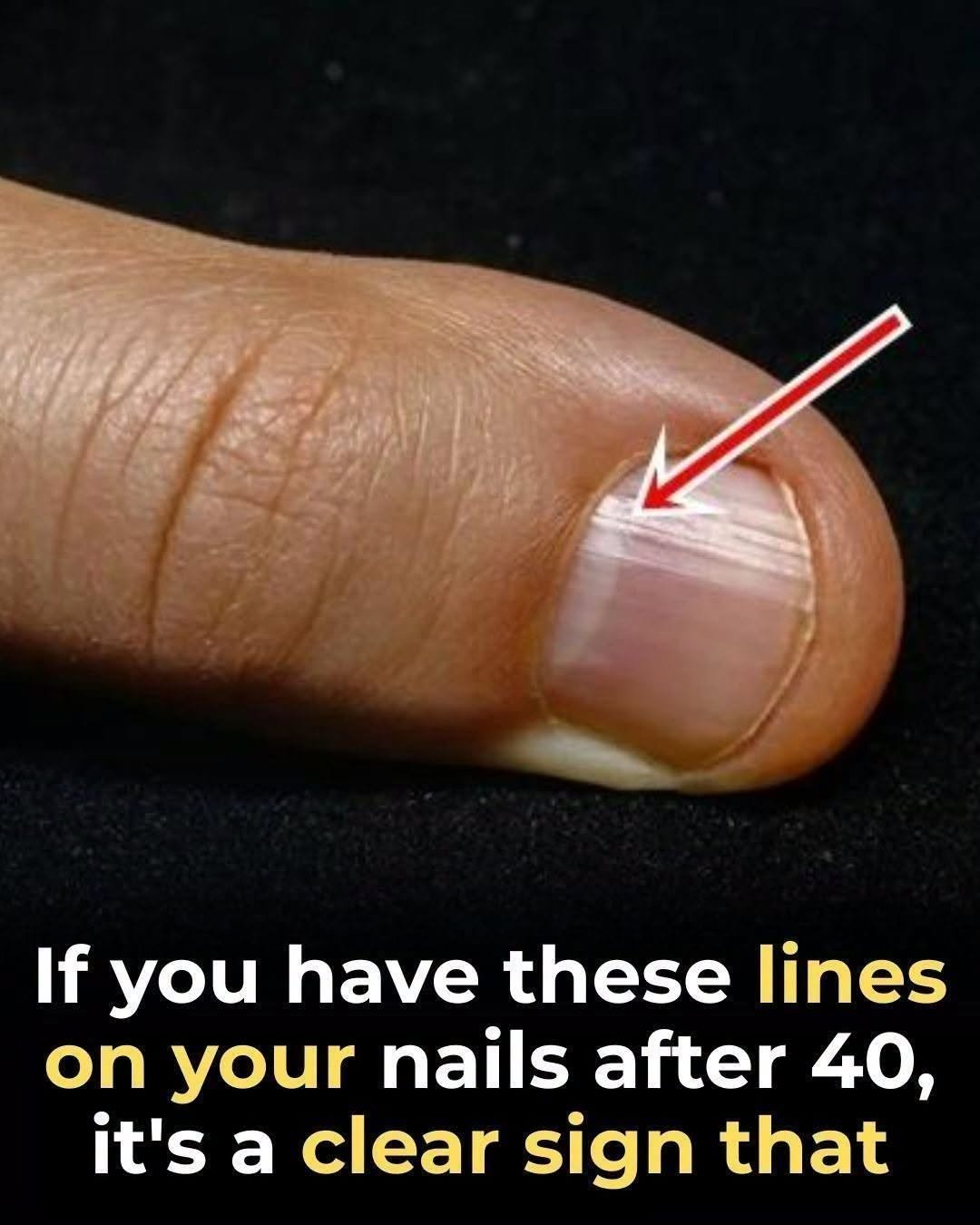
Have you ever looked closely at your fingernails and noticed small lines, ridges, unusual colors, or changes in their texture? Although these changes are often harmless, your nails can sometimes provide useful clues about your general health.
As we get older, our nails naturally change. After the age of 40, some people notice more prominent vertical ridges, increased brittleness, dryness, or slower nail growth. These changes do not automatically mean that something is wrong, but sudden or unusual nail changes deserve attention.
Your nails are made primarily of keratin, a strong protein that also forms part of your hair and the outer layer of your skin. The nail plate grows from a specialized area beneath the skin called the nail matrix. When nail growth is affected by aging, injury, inflammation, or certain medical conditions, the surface and appearance of the nail may change.
In this article, we will explore the most common nail changes, what they may mean, which warning signs should not be ignored, and how to maintain healthy nails as you age.
Why Your Nails May Change After 40
Aging affects many parts of the body, including the skin, hair, and nails. Fingernails may become more brittle, develop visible ridges, or lose some of their natural smoothness.
According to the Mayo Clinic, vertical nail ridges are common and often become more noticeable with age. In many cases, these ridges are harmless and do not require medical treatment.
However, age is not the only possible explanation for nail changes. Dry skin, repeated exposure to water and cleaning products, nail injuries, certain skin conditions, and nutritional deficiencies may also affect the nails.
The important thing is to pay attention to changes in their appearance, particularly if they develop suddenly or occur alongside other symptoms.
1. Vertical Ridges Running From the Cuticle to the Tip
Vertical ridges are raised lines that extend from the base of the nail toward its tip. They are among the most common nail changes people notice as they get older.
These ridges may appear on one or several fingernails. They can be subtle or become more prominent over time.
What might cause vertical ridges?
Common causes include:
- Natural aging and changes in nail growth.
- Dry nails and surrounding skin.
- Frequent handwashing or exposure to detergents.
- Minor nail trauma.
- Certain skin conditions.
- Occasionally, nutritional deficiencies or other medical conditions.
Most mild vertical ridges are harmless, especially when the nails retain their normal color and shape and there are no other symptoms.
However, if the ridges appear suddenly, become unusually deep, or occur alongside fatigue, changes in nail color, or nail weakness, a healthcare professional can help determine whether further evaluation is necessary.
Image suggestion: A close-up photograph of a fingernail showing fine vertical ridges.
2. Horizontal Lines or Deep Grooves Across the Nails
Horizontal ridges look different from vertical ridges. Instead of running from the cuticle to the tip, they extend across the nail from one side to the other.
Deep horizontal grooves are sometimes called Beau’s lines. They can develop when nail growth temporarily slows or stops.
What can cause horizontal nail ridges?
Possible causes include:
- A significant illness accompanied by a high fever.
- A serious infection.
- Direct injury to the nail or nail matrix.
- Certain medical treatments, including chemotherapy.
- Severe nutritional problems.
- Some chronic medical conditions.
A horizontal groove does not necessarily indicate a dangerous disease. Sometimes it simply reflects a temporary interruption in nail growth during an illness or after an injury.
Because the nail grows slowly, the groove may gradually move toward the tip as the nail grows.
If several nails develop new horizontal grooves, or if the changes occur without an obvious explanation, consult a healthcare professional.
3. Brittle Nails That Split or Break Easily
Nails that split, peel, or break with little pressure can be frustrating. Although brittleness becomes more common with age, it may also result from everyday habits and environmental exposure.
Frequent contact with water, household cleaning products, nail polish removers, and artificial nail treatments can weaken the nail plate.
Dryness can also make the nails more likely to crack.
How can you protect brittle nails?
Try these simple habits:
- Apply a moisturizing cream to your hands and nails regularly.
- Wear protective gloves when washing dishes or using cleaning products.
- Keep your nails at a comfortable, manageable length.
- Avoid aggressive filing and repeated removal of artificial nails.
- Do not pick, bite, or tear at peeling nails.
If your nails suddenly become very brittle or the problem persists despite gentle nail care, a medical assessment may help identify the cause.
4. White Spots and Lines on the Nails
Small white spots are common and often result from minor injuries to the nail, even when you do not remember hitting your finger.
These spots usually grow out as the nail grows.
White lines, however, can have different explanations depending on their appearance and whether they affect one or several nails.
Possible causes include nail trauma, certain medications, and some medical conditions. White marks alone do not reliably establish that someone has a vitamin or mineral deficiency.
When should you be concerned?
Consider seeing a healthcare professional if you notice persistent white lines across several nails, widespread discoloration, or white marks accompanied by changes in nail thickness or shape.
Avoid taking high-dose supplements solely because white spots appear. Testing and professional advice can help determine whether a deficiency is actually present.
5. Yellow, Thickened, or Crumbling Nails
Yellow nails may develop for several reasons. Common possibilities include nail polish staining, fungal infections, and certain skin conditions.
Fungal nail infections can cause nails to become yellowish, thick, brittle, or crumbly. The nail may also separate from the skin underneath.
Other conditions can produce similar changes, so appearance alone may not confirm a fungal infection.
What should you do?
Keep your nails clean and dry, avoid sharing nail clippers, and use clean manicure tools.
If a nail becomes progressively thicker, discolored, or crumbly, arrange an assessment with a healthcare professional. Appropriate treatment depends on the underlying cause.
Do not assume every yellow nail requires antifungal medication, as some treatments may be unsuitable when the diagnosis is uncertain.
6. Dark Lines Under the Nails
A dark brown or black line running lengthwise along a nail deserves special attention, particularly if it is new or changing.
Some dark nail marks are caused by minor injuries, pigmentation, or other benign conditions. However, a dark streak can occasionally be a sign of melanoma, a type of skin cancer that may develop under a fingernail or toenail.
Warning signs include:
- A new dark streak without an obvious explanation.
- A streak that becomes wider or changes color.
- Irregular pigmentation.
- Darkening of the skin around the nail.
- Nail splitting or lifting associated with the mark.
A new or changing dark streak should be examined promptly by a dermatologist. Do not wait for it to grow out or assume it is harmless based on a photograph.
7. Nails That Become Pale, Spoon-Shaped, or Unusually Curved
⏬Continued ⏬on the ⏬next ⏬page
