
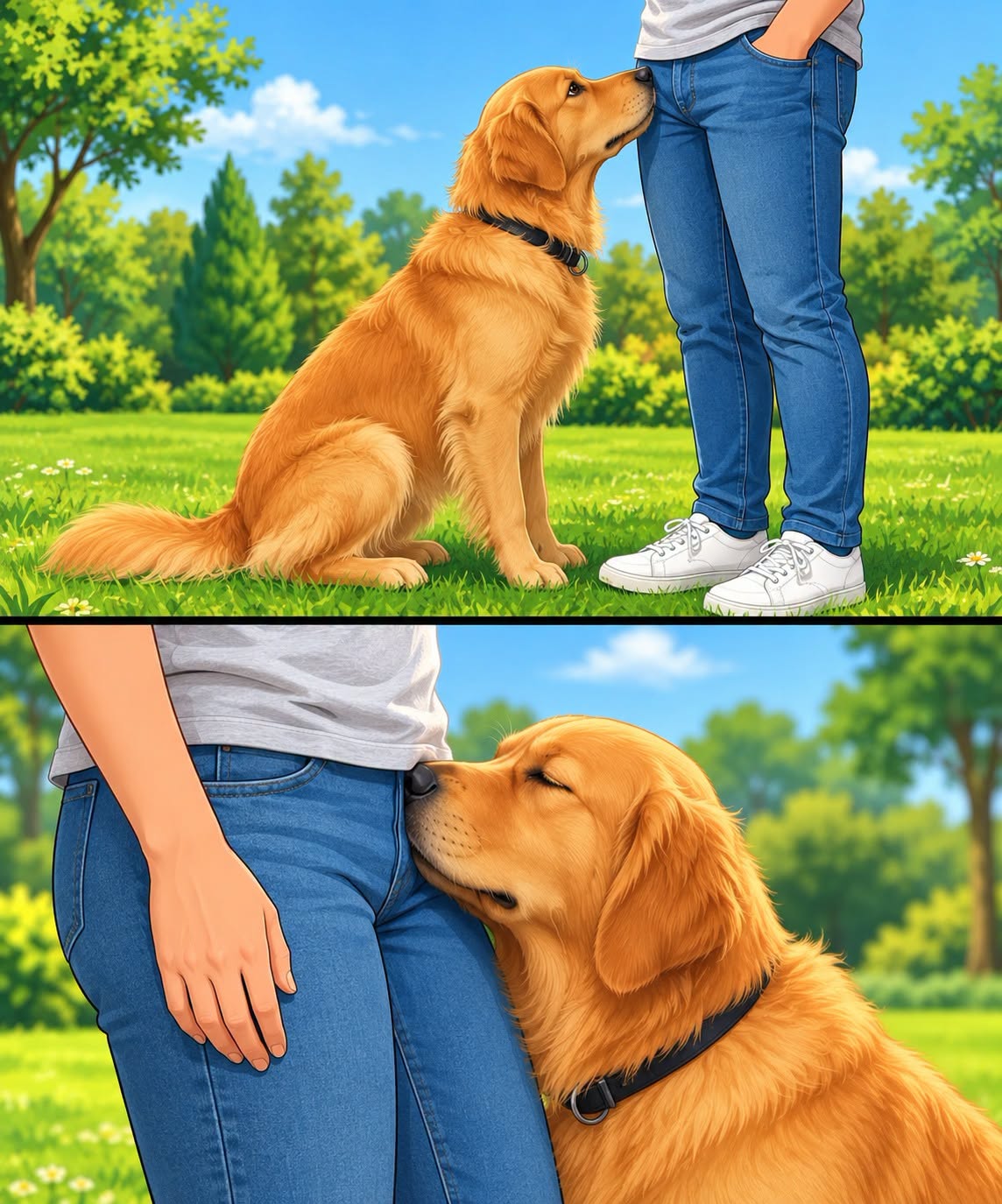
Why You Should Let Your Dog Stop and Sniff During Walks — The Surprising Truth About What Their Nose Is Telling Them
That little moment when your dog suddenly stops to smell a patch of grass might seem unimportant to you. But to your furry companion, it could be one of the most fascinating parts of the entire day. Understanding why dogs sniff so much might completely change the way you approach your daily walks.
If you have ever taken a dog for a walk, you probably know exactly how it goes.
You put on your shoes, grab the leash, and head outside, imagining a pleasant stroll around the neighborhood. The weather is beautiful, the air feels fresh, and you are ready to get some exercise.
Your dog seems equally excited.
They rush toward the door, wagging their tail, practically vibrating with anticipation. Everything suggests that the two of you are about to enjoy a wonderful walk together.
Then, barely thirty seconds after leaving the house, your dog stops.
Completely.
Their nose drops toward the ground. Their ears shift forward. Their entire attention becomes focused on a tiny patch of grass beside the sidewalk.
You wait.
And wait.
You gently encourage them to keep moving.
Nothing happens.
To you, it is just grass. Perhaps a little dirt, a fallen leaf, or an ordinary fire hydrant that looks exactly the same as it did yesterday.
But your dog is completely fascinated.
They sniff one spot, move their nose an inch to the left, return to the original spot, and investigate again as though they have discovered something extraordinary.
Eventually, you find yourself saying what countless dog owners have said before:
“Come on! There’s nothing there!”
But what if there is something there?
What if that ordinary patch of grass contains more information than you could possibly imagine?
And what if constantly hurrying your dog along means missing an important opportunity for mental stimulation and natural exploration?
The answer lies in understanding how dogs experience the world.
The Dog Who Taught Me to Slow Down
For years, many dog owners believe that a successful walk means covering a reasonable distance in a reasonable amount of time.
You leave the house, follow your usual route, walk around the block, and return home.
Simple.
At least, that is the plan.
But some dogs have a completely different idea.
Imagine a dog named Gus who treats every tree, bush, fence, and sidewalk as a mystery waiting to be investigated. From the moment he steps outside, he stops frequently, lowers his nose, and begins sniffing with extraordinary concentration.
His owner initially becomes frustrated.
There is a schedule to follow, exercise to complete, and a route to finish. Surely, the dog does not need to spend several minutes investigating the same tree every morning.
But gradually, a different perspective emerges.
Gus is not necessarily being stubborn. He is exploring his surroundings through one of the most important senses available to him.
While his owner enjoys the scenery with their eyes, Gus investigates an invisible landscape of odors.
That familiar tree might carry scents left behind by other animals, passing people, and environmental changes. Rain, wind, temperature, and the movement of wildlife can all influence the odors present in an outdoor environment.
The tree may look unchanged, but its scent landscape can be different from one day to the next.
Once we understand this, sniffing becomes less like an interruption and more like a meaningful part of a dog’s walk.
1. A Dog’s Nose Is Far More Powerful Than Most People Realize
<AsyncImage query=”close up portrait of a dog sniffing green grass outdoors natural light” aspectRatio=”16:9″ width=”100%”/>
Humans rely heavily on vision. We recognize faces, read signs, identify colors, and navigate the world primarily through what we see.
Dogs use their eyes too, of course, but smell plays an especially important role in how they investigate their environment.
A dog’s nose is an extraordinarily sophisticated biological instrument.
Depending on the breed and individual anatomy, dogs may have hundreds of millions of olfactory receptor cells, substantially more than humans. Their nasal structures and brain processing systems are also specialized for detecting and distinguishing odors.
When a dog sniffs, odor molecules enter the nose and interact with receptors that send information to the brain. The brain then processes these signals, helping the animal distinguish between different smells.
Dogs can use scent to investigate the presence of other animals, locate food, follow trails, and recognize familiar people and places.
Their sense of smell is so useful that specially trained dogs can assist with search-and-rescue operations, detecting certain substances, and locating missing people.
However, dogs do not all have identical scent-detection abilities. Breed, age, health, training, and environmental conditions can influence performance.
The important point is that sniffing is not simply an unnecessary habit. It is a natural way for dogs to gather information about the world around them.
2. Every Patch of Grass Can Tell a Different Story
<AsyncImage query=”dog lowering nose to sniff grass beside a tree on a neighborhood walking path” aspectRatio=”16:9″ width=”100%”/>
Imagine opening your favorite social media app.
You scroll through updates, photographs, messages, and news about people you know. In just a few minutes, you can learn what has happened since your last visit.
For dogs, sniffing can serve a somewhat similar information-gathering purpose, although it is not literally the same as reading or checking social media.
A patch of grass may contain odors left by other dogs, cats, wildlife, insects, and people. These smells can provide clues about which animals have passed through an area.
Dogs may also investigate urine markings, which can contain chemical signals associated with the animal that left them.
Depending on the scent and the individual dog, this information may help the animal recognize familiar odors, notice unfamiliar animals, or decide whether a particular location deserves further investigation.
This is one reason dogs frequently return to the same trees, bushes, fence posts, and patches of grass.
The location might be familiar, but the odors present there can change.
Your dog is not necessarily interested in the tree itself. They may be interested in what has happened around it since the last visit.
Of course, we cannot know exactly what a dog is thinking from a sniffing session alone. Nevertheless, scent investigation is a well-established and important part of canine behavior.
3. Sniffing Provides Valuable Mental Stimulation
<AsyncImage query=”happy dog leisurely sniffing plants during a relaxed outdoor walk with owner” aspectRatio=”16:9″ width=”100%”/>
Walking provides physical exercise, but dogs also benefit from activities that engage their minds.
Sniffing encourages a dog to investigate, process sensory information, and make choices about where to explore next.
This can make a walk more mentally engaging than simply moving continuously from one point to another.
Imagine the difference between walking through a room without looking around and being allowed to examine everything that interests you. The second experience gives you more opportunities to explore and interact with your surroundings.
For dogs, scent exploration can add a similar dimension to an ordinary outing.
A leisurely sniffing walk may be particularly enjoyable for dogs that love exploring, although individual preferences vary.
It can also provide an appropriate activity for dogs that cannot comfortably complete long or vigorous walks because of age, physical limitations, or certain health conditions.
Sniffing does not replace necessary physical exercise, but it can complement it.
The amount and type of activity should always suit the dog’s age, fitness, health, and temperament.
4. Letting Your Dog Sniff May Help Them Feel More Relaxed
<AsyncImage query=”calm dog peacefully sniffing wildflowers and grass in a quiet park” aspectRatio=”16:9″ width=”100%”/>
Have you ever noticed how absorbed your dog becomes when investigating an interesting smell?
Their pace slows, their attention narrows, and they may spend several minutes exploring a small area.
For many dogs, this kind of self-directed exploration can be a rewarding and engaging activity.
Research on canine behavior suggests that opportunities to perform natural behaviors, including olfactory exploration, can contribute to positive welfare. Some studies have also found associations between scent-based activities and changes in behavioral indicators of emotional state.
However, sniffing should not be presented as a guaranteed treatment for anxiety or as proof that a dog is relaxed.
A dog that sniffs intensely may be excited, curious, uncertain, or responding to a particularly interesting odor. Body language and the surrounding situation help provide context.
Look for a generally loose body, comfortable movement, and an ability to disengage from a scent without becoming distressed.
If your dog appears frightened, tense, or overwhelmed, give them space and avoid forcing them to investigate.
The goal is to offer opportunities for enjoyable exploration, not to insist that every dog must sniff for a particular length of time.
5. Sniffing Can Help Dogs Explore Their Social World
<AsyncImage query=”two friendly dogs calmly greeting each other outdoors in a grassy park” aspectRatio=”16:9″ width=”100%”/>
Dogs communicate in several ways, including body posture, facial expressions, vocalizations, and scent.
Smell plays a particularly important role in how they investigate other animals.
When dogs encounter scent markings, they may collect information about the presence of other dogs in the area. When meeting another dog, they may also sniff around the body, including the rear, as part of their natural greeting behavior.
Although this behavior can look unusual to people, it is a normal part of canine communication.
Allowing appropriate sniffing can give dogs opportunities to investigate their surroundings without requiring direct contact with unfamiliar animals.
This distinction matters.
Your dog does not need to greet every dog they encounter to have a satisfying walk. In fact, some dogs feel more comfortable observing and sniffing at a distance.
Always consider the other dog’s body language and the wishes of the other owner. Keep sufficient space between dogs when either animal seems uncomfortable, and never force an interaction.
A good walk allows your dog to explore while maintaining safety and respecting other animals.
6. Sniffing Gives Dogs More Control Over Their Walks
<AsyncImage query=”dog on a loose leash exploring a grassy path with owner walking beside it” aspectRatio=”16:9″ width=”100%”/>
Dogs do not control every part of their daily routine.
People decide when they go outside, where they walk, when meals are served, and when many activities begin or end.
Providing safe opportunities for choice can improve a dog’s daily experience.
During a walk, this might mean allowing your dog to choose between two safe paths, investigate an interesting patch of grass, or spend a little longer examining a scent.
These small choices offer opportunities for natural behavior.
They can also help owners learn more about their dogs’ preferences. One dog might love exploring bushes and woodland paths, while another prefers quiet sidewalks and open spaces.
Not every sniffing opportunity needs to last several minutes. The important thing is to avoid treating every pause as disobedience.
Of course, safety still comes first. Dogs should not be allowed to investigate dangerous rubbish, approach aggressive animals, or enter unsafe areas simply because they are curious.
The best approach combines freedom to explore with consistent, gentle guidance.
7. Sniffing Can Make Walks More Interesting for Older Dogs
<AsyncImage query=”senior dog slowly exploring grass in a quiet garden on a sunny day” aspectRatio=”16:9″ width=”100%”/>
As dogs grow older, their exercise needs and physical abilities may change.
Some senior dogs develop joint discomfort, reduced stamina, or other conditions that make long walks more difficult.
That does not mean they must give up exploring their surroundings.
For a dog that can walk comfortably, a shorter outing with plenty of sniffing opportunities may be an enjoyable alternative to a long, brisk route.
The pace should be adjusted to the dog’s condition. Some older dogs remain energetic and active, while others need frequent rests or much shorter outings.
If your senior dog suddenly becomes reluctant to walk, starts limping, seems unusually tired, or struggles to stand, consult a veterinarian rather than assuming the changes are simply part of aging.
Sniffing can enrich a senior dog’s routine, but it is not a substitute for assessing pain or other health concerns.
8. Sniffing Games Can Keep Dogs Busy at Home
<AsyncImage query=”dog searching for hidden treats in a snuffle mat on a living room floor” aspectRatio=”16:9″ width=”100%”/>
Sniffing does not have to happen outdoors.
Simple scent-based games can provide an engaging activity at home, especially during bad weather or when a dog needs a quieter day.
Here are three easy ideas to try.
The hidden-treat game
Hide a few pieces of your dog’s regular kibble in easy-to-find places around one room. Encourage your dog to search for them.
Begin with obvious hiding places and gradually make the game more challenging as your dog understands what to do.
The snuffle mat
A snuffle mat has fabric folds where small pieces of food can be hidden. Your dog uses their nose to locate the pieces.
Choose a mat that suits your dog, supervise the activity, and remove it if your dog begins chewing or swallowing the fabric.
The scent trail
Place a few pieces of your dog’s food along a short, safe trail on the floor or in the garden. Let your dog follow the trail to discover the reward.
Keep the trail away from harmful substances, sharp objects, toxic plants, and areas where food could become contaminated.
Use appropriate portions of your dog’s normal food or treats, and account for treats in their daily food intake.
These games should be enjoyable rather than frustrating. If your dog loses interest or becomes overwhelmed, simplify the activity or take a break.
9. How to Give Your Dog a Better Sniffing Walk
<AsyncImage query=”dog and owner enjoying a relaxed morning walk along a green park trail” aspectRatio=”16:9″ width=”100%”/>
You do not need to completely change your daily routine to give your dog more opportunities to sniff.
A few practical adjustments can make a difference.
Choose a safe route
Look for quiet paths, grassy areas, and parks where dogs are permitted. Avoid places with heavy traffic, dangerous debris, or obvious chemical contamination.
Use a comfortable leash
A standard leash that provides enough room for safe exploration can help your dog investigate without pulling you constantly.
Keep your dog under control and follow local leash rules. Do not allow the leash to become tangled around legs, trees, or other obstacles.
Allow regular sniffing breaks
Instead of expecting your dog to walk continuously, build short exploration periods into the outing.
Let them investigate appropriate spots when it is safe to do so. You can then use a familiar cue, such as “Let’s go,” when it is time to continue.
Balance exploration with exercise
Some walks can focus on leisurely sniffing, while others can include more continuous movement.
Your dog may benefit from both, depending on their age, health, and energy level.
Avoid rushing every pause
If you are not in a hurry and the location is safe, allow your dog a little extra time to investigate.
A walk does not always need to be measured by distance alone.
Keep the experience positive
Reward your dog for walking comfortably on a loose leash and responding to cues. Avoid repeatedly yanking the leash or punishing natural sniffing behavior.
Gentle, consistent training can help you balance your dog’s curiosity with the practical demands of everyday life.
10. When Should You Stop Your Dog From Sniffing?
 Continued on the next page
