
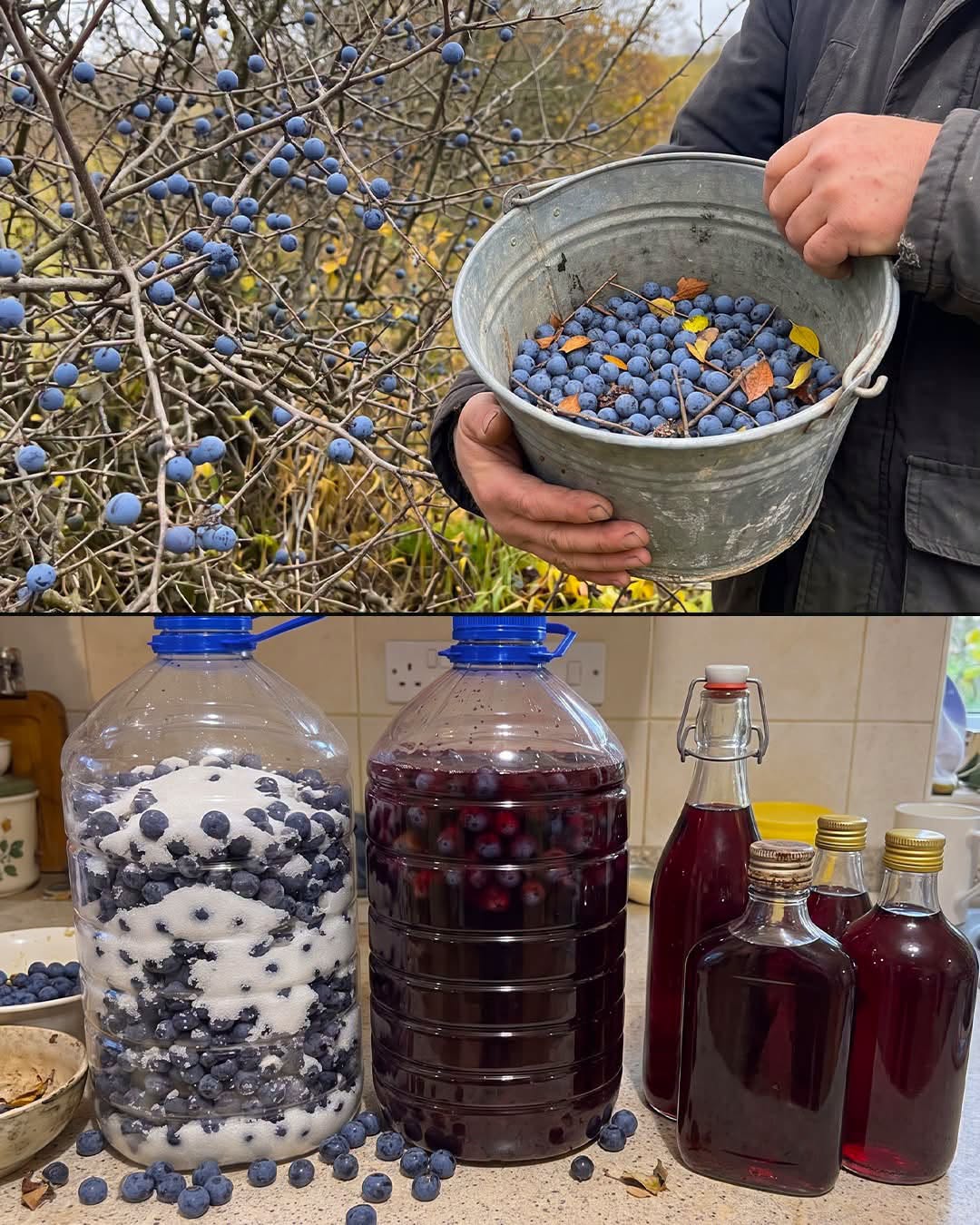
Long used to create natural farm boundaries, blackthorn is now treasured for its dark autumn berries and the rich, ruby-red liqueur they can produce.
Long before modern fences became common, farmers relied on dense hedgerows to protect their livestock and mark the boundaries of their land. One of the plants often used for this purpose was blackthorn (Prunus spinosa), a hardy, thorn-covered shrub or small tree known for its tangled branches and beautiful spring blossoms.
Today, blackthorn remains an important part of traditional countryside landscapes. But when autumn arrives, it attracts attention for another reason: its small, dark blue fruits, commonly known as sloes.
These intensely tart berries are rarely enjoyable when eaten raw. However, when combined with sugar and gin or vodka, they can develop into a fragrant homemade liqueur with a deep ruby color and a rich, fruity flavor.
From identifying the plant to preparing the fruit and making a traditional infusion, here’s what to know about blackthorn and the seasonal drink made from its berries. 🍸
🌳 What Is Blackthorn?
Blackthorn is a deciduous shrub or small tree native to much of Europe and parts of western Asia. Its scientific name is Prunus spinosa, and it belongs to the rose family, which also includes cherries, plums, and peaches.
The plant is particularly recognizable by its dark, thorny branches. Over time, blackthorn can form dense hedges that provide shelter for wildlife and create natural boundaries around fields and gardens.
🌼 Beautiful White Blossoms in Spring
One of blackthorn’s most distinctive features is its early spring flowering.
Small white flowers often appear on the bare branches before the leaves emerge, creating a striking display across hedgerows and woodland edges.
These flowers provide an early source of nectar and pollen for insects when relatively few other plants are flowering.
🫐 Dark Blue Berries in Autumn
After flowering and pollination, blackthorn produces small, round fruits known as sloes.
They are usually dark blue or purple beneath a pale, powdery coating called the bloom. Although they resemble miniature plums, their flavor is very different.
Fresh sloes are famously sour and astringent because they contain tannins and organic acids. Rather than eating them straight from the branch, people traditionally use them in preserves, flavored spirits, syrups, and other recipes.
🛡️ Why Was Blackthorn Planted Around Farms?
Before wire fencing became widespread, living hedges were a practical way to manage farmland.
Blackthorn was valued for several reasons:
- Dense growth: Its tangled branches form a thick natural barrier.
- Sharp thorns: The spiny branches discourage livestock and people from pushing through the hedge.
- Hardiness: The plant can tolerate a range of conditions once established.
- Wildlife habitat: Its branches offer shelter and nesting opportunities for birds and other animals.
- Seasonal fruit: Its berries provide food for wildlife in autumn.
Blackthorn hedges remain useful in some rural landscapes today. However, the plant can spread through suckers and form dense thickets, so it should be planted thoughtfully and managed where necessary.
🍇 What Are Sloes, and Why Are They So Tart?
 Continued on the next page
