
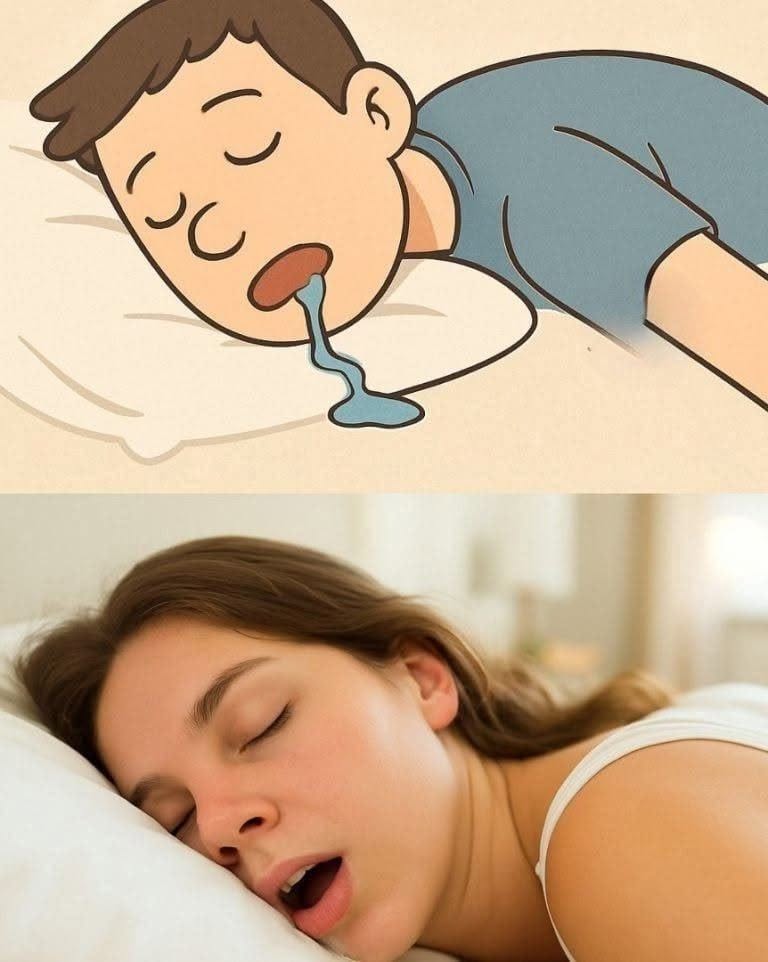
6. Medication Side Effects
Certain medications can contribute to drooling or make it more difficult to manage saliva during sleep.
Some medicines increase saliva production, while others may cause sedation or affect muscle coordination and swallowing. The effects depend on the particular medication, dosage, and individual response.
Medicines used to treat certain psychiatric or neurological conditions are among those that may sometimes cause excessive salivation.
Signs That a Medication May Be Involved
Consider whether the drooling started after:
- Beginning a new prescription.
- Increasing the dose of an existing medicine.
- Adding an over-the-counter product.
- Combining several medicines that cause drowsiness.
Keep in mind that the timing alone does not prove that a medication is responsible.
What Should You Do?
Review your medications with your doctor or pharmacist, especially if nighttime drooling began recently or has become more noticeable.
Do not stop a prescribed medicine or change its dosage on your own. A healthcare professional can determine whether an alternative treatment, dose adjustment, or another approach may be appropriate.
Other Common Reasons You May Drool While Sleeping
Although the six conditions above can contribute to nighttime drooling, many people experience it without having an underlying illness.
Sleeping on your side or stomach can make it easier for saliva to escape through the lips. Relaxation of the facial muscles during sleep can also contribute.
Other possible factors include temporary nasal congestion, mouth anatomy, dental or oral problems, and changes in saliva production.
If the drooling is occasional, mild, and not accompanied by other symptoms, it is often not a cause for concern.
However, persistent, excessive, or newly developed drooling deserves attention, particularly if it occurs alongside swallowing problems or other changes in health.
How to Reduce Drooling While Sleeping
The most effective approach depends on the cause. The following measures may help when the problem is mild and there are no warning signs.
1. Try a Different Sleeping Position
If you usually sleep on your stomach or side, experimenting with sleeping on your back may reduce saliva escaping from your mouth. However, this is not appropriate for everyone, and sleeping on your back can worsen snoring or obstructive sleep apnea in some people.
If you have diagnosed or suspected sleep apnea, ask a healthcare professional which sleeping position is suitable for you.
2. Address Nasal Congestion
If you struggle to breathe through your nose, treating the underlying congestion may reduce mouth breathing.
Saline nasal sprays and appropriate allergy management may help. Persistent nasal obstruction should be evaluated rather than managed indefinitely with over-the-counter products.
3. Manage Acid Reflux
Avoid eating large meals shortly before lying down if reflux is a problem. Identifying personal food triggers and elevating the head of the bed may also help.
Frequent or severe symptoms should be discussed with a healthcare professional.
4. Review Your Medications
Ask your doctor or pharmacist whether any of your medications could contribute to excessive saliva or swallowing difficulties.
Do not discontinue prescribed medication without professional advice.
5. Maintain Good Oral Hygiene
Brush your teeth regularly, clean between your teeth, and attend routine dental appointments.
Good oral hygiene does not necessarily stop drooling, but it helps maintain oral health and may identify dental or gum problems that require treatment.
6. Seek Medical Advice if Symptoms Persist
Arrange an appointment if drooling is frequent, has suddenly increased, disrupts your sleep, or occurs alongside persistent nasal obstruction, reflux, snoring, or swallowing difficulties.
A healthcare professional can assess the symptoms and determine whether further testing or treatment is needed.
When Is Nighttime Drooling an Emergency?
Drooling during sleep is usually not an emergency by itself. However, certain accompanying symptoms require immediate attention.
Call emergency services if drooling begins suddenly alongside:
- Facial drooping or one-sided weakness.
- Sudden difficulty speaking or understanding speech.
- Sudden confusion or loss of coordination.
- Difficulty breathing or choking.
- Inability to swallow saliva, especially if accompanied by breathing difficulties.
Do not try to force food, drinks, or medication into the mouth of someone who may be having a stroke or cannot swallow safely.
Prompt medical assessment is also important for persistent swallowing difficulties, repeated choking while eating, or unexplained weight loss.
Frequently Asked Questions
1. Is drooling while sleeping normal?
Yes. Occasional nighttime drooling is common and often results from sleeping position, relaxed facial muscles, or temporary nasal congestion. Frequent or newly developed drooling may warrant further evaluation.
2. Does drooling during sleep mean I have sleep apnea?
No. Drooling alone does not diagnose sleep apnea. Loud snoring, witnessed pauses in breathing, gasping during sleep, and excessive daytime sleepiness are more useful warning signs to discuss with a healthcare professional.
3. Can acid reflux cause excessive saliva at night?
Yes. Reflux can trigger increased saliva production in some people. However, nighttime drooling has many possible causes, and other symptoms are needed to help determine whether reflux is involved.
4. Can medications cause drooling during sleep?
Yes. Some medications can increase saliva production or affect swallowing and muscle coordination. If drooling begins after a medication change, ask your doctor or pharmacist to review your treatment.
5. How can I stop drooling on my pillow?
Depending on the cause, you may benefit from addressing nasal congestion, managing reflux, or trying a different sleeping position. If the problem is persistent or associated with swallowing difficulties, seek medical advice rather than relying only on home remedies.
6. When should I worry about drooling?
Seek medical advice if drooling becomes frequent, severe, or persistent, especially if you have difficulty swallowing, unexplained weight loss, or other new symptoms. Sudden drooling with facial weakness, speech difficulties, or breathing problems requires emergency attention.
7. Can dehydration cause nighttime drooling?
Dehydration more commonly causes a dry mouth than excessive drooling. However, mouth breathing, medication effects, and changes in saliva consistency may complicate the picture. Drinking adequate fluids supports general health, but persistent drooling should be assessed based on its underlying cause.
Conclusion
Frequent drooling while sleeping can be inconvenient, but it is not always a sign of a serious health problem. Sleeping position, nasal congestion, allergies, acid reflux, sleep apnea, neurological conditions, and medication effects can all contribute.
The key is to pay attention to changes. Occasional drooling without other symptoms is usually harmless, while persistent drooling accompanied by swallowing difficulties, loud snoring, or other new symptoms deserves medical evaluation.
Most importantly, sudden drooling combined with facial weakness, difficulty speaking, or breathing problems should never be ignored.
Understanding the possible causes can help you decide when simple adjustments may be enough and when professional medical advice is needed.
Medical disclaimer: This article is for educational purposes only and is not a substitute for professional medical advice, diagnosis, or treatment.
