
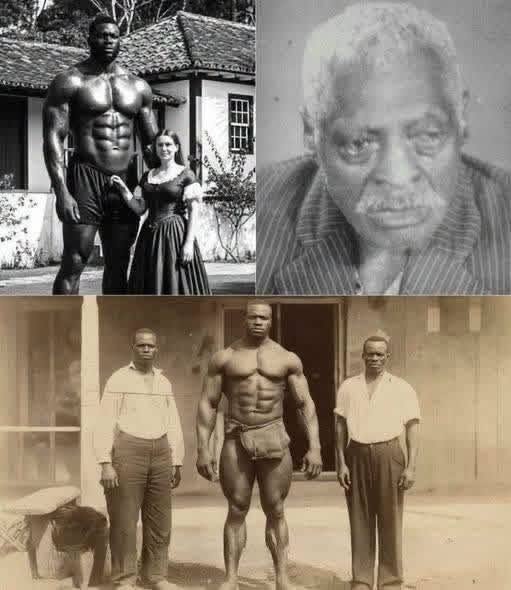
The story of Pata Seca has attracted widespread attention because it combines an extraordinary physical description with the painful history of slavery in Brazil. Remembered in local traditions as an exceptionally tall man who lived during the nineteenth century, Pata Seca has become the subject of fascinating stories about his life, his descendants, and the conditions he endured.
But how much of this remarkable story is supported by historical evidence, and how much remains part of local legend?
Pata Seca is the nickname associated with Roque José Florêncio, a man whose story has been passed down through generations in the Brazilian state of São Paulo. Although several accounts describe his unusual height and the hardships he experienced under slavery, important details about his life remain difficult to verify independently.
Who Was Pata Seca?
According to local accounts, Roque José Florêncio was born in the nineteenth century and lived under Brazil’s system of slavery. He became known by the nickname Pata Seca, which is often associated with stories describing his unusual physical appearance.
Some accounts claim that he stood approximately 2.18 meters (7 feet 2 inches) tall. If accurate, this would have made him exceptionally tall by historical standards. However, a reliable contemporary measurement or independently verified medical record has not been established in the accounts commonly circulated online.
His story is also associated with disturbing descriptions of how enslavers exploited enslaved people for their labor and reproductive capacity. Under slavery, individuals were denied fundamental freedoms, and their personal relationships and family lives could be controlled by those who claimed ownership over them.
These accounts reflect the broader brutality of slavery, even though the specific circumstances of Florêncio’s life require careful historical investigation.
Did Pata Seca Really Have More Than 200 Children?
One of the most widely repeated claims about Pata Seca is that he fathered more than 200 children. Some versions of the story also suggest that he lived to approximately 130 years of age.
These extraordinary figures have contributed to the fascination surrounding his name, but they should not automatically be accepted as established historical facts.
Confirming the number of children attributed to one individual would require reliable evidence, such as birth registers, church records, family genealogies, or other surviving historical documents. Establishing an exceptionally long lifespan would similarly require credible records confirming his birth and death dates.
Oral histories can preserve valuable information, particularly when official records are incomplete or when the experiences of marginalized communities have been poorly documented. Nevertheless, details may change as stories are passed from one generation to another.
For this reason, claims about Pata Seca’s descendants and lifespan should be presented as reported traditions unless they can be supported by independently verifiable evidence.
Are the Photographs of Pata Seca Authentic?
Photographs shared online alongside stories about Pata Seca are another source of uncertainty.
An image appearing in a social media post or online article does not, by itself, establish the identity of the person pictured. To authenticate a historical photograph, researchers would ideally need information about its original source, date, photographer, archival collection, or documented ownership history.
Without this information, it is difficult to determine whether a photograph genuinely depicts Roque José Florêncio or has been incorrectly attributed to him.
Images may also be used illustratively to represent a historical period rather than to portray a specific individual. In some cases, old photographs circulate online with misleading captions, while other images may have been edited or digitally manipulated.
Consequently, photographs shared with Pata Seca’s story should be treated cautiously unless a reliable archival source confirms their authenticity.
The Historical Reality of Slavery in Brazil
⏬Continued ⏬on the ⏬next ⏬page
