
The Historical Reality of Slavery in Brazil
Although some details about Pata Seca remain uncertain, the historical context surrounding his story is well established.
Brazil was one of the largest destinations for enslaved Africans during the transatlantic slave trade. Enslaved people were forced to work in agriculture, mining, domestic service, and numerous other areas of the economy. They were denied legal freedom and subjected to violence, exploitation, family separation, and other severe abuses.
Brazil formally abolished slavery on May 13, 1888, when Princess Isabel signed the Golden Law, known as the Lei Áurea. It was the last country in the Americas to abolish slavery.
The abolition of slavery did not immediately eliminate racial discrimination or economic inequality. Many formerly enslaved people faced considerable barriers to land ownership, education, employment, and social advancement.
Understanding this wider history helps place stories such as Pata Seca’s within the realities experienced by countless enslaved people whose lives were rarely documented in detail.
Why Has Pata Seca’s Story Attracted So Much Attention?
Stories about extraordinary height, remarkable longevity, and unusually large families naturally attract curiosity. When these claims are combined with the history of slavery, they can spread quickly through social media and online publications.
However, dramatic details can sometimes overshadow the historical circumstances that made a person’s life significant.
In Pata Seca’s case, the reported height of 2.18 meters, the claim of more than 200 children, and the suggestion that he lived to around 130 years old are particularly striking. Yet each of these claims needs to be evaluated separately rather than treated as automatically true because it appears alongside other accounts of his life.
Responsible historical storytelling requires a distinction between documented evidence, oral tradition, and speculation. This approach does not dismiss local memory. Instead, it recognizes the importance of preserving community stories while being honest about the limits of the available evidence.
What Can We Learn From His Story?
Pata Seca’s story offers an opportunity to reflect on the experiences of enslaved people in Brazil and the importance of preserving historical memory.
The history of slavery is not simply a collection of dates and legal changes. It is also the history of individuals whose freedom, labor, families, and futures were controlled by others.
Even when a particular biography contains uncertain details, the broader history of slavery remains essential to understanding the conditions in which these individuals lived.
Researchers can help clarify such stories by examining civil registration records, church archives, historical newspapers, property documents, and family genealogies. Interviews with descendants and local historians may also provide important leads, especially when their accounts can be compared with documentary evidence.
This process allows historians to preserve meaningful oral traditions without presenting every detail as a confirmed fact.
It also reminds readers that the significance of a historical figure should not depend entirely on extraordinary physical characteristics, an astonishing number of descendants, or an unusually long lifespan. The human experiences behind the story deserve attention in their own right.
So, Is the Story of Pata Seca Real?
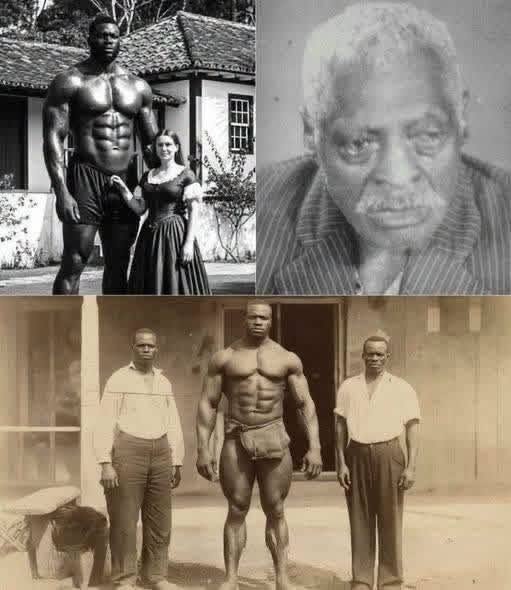
Pata Seca is a figure associated with Brazilian local memory, and the story attributed to Roque José Florêncio has circulated widely. However, several specific claims about his height, age, and alleged 200 or more children require stronger independent documentation before they can be regarded as definitively established facts.
The photographs circulated alongside the story also require authentication through traceable historical sources.
The most responsible approach is therefore to distinguish between the accounts passed down through local tradition and the details that can be verified through historical records.
Pata Seca’s story remains a compelling reminder of the importance of investigating the past carefully, particularly when it concerns people whose lives unfolded under systems of extreme oppression.
By approaching his story with curiosity, respect, and historical caution, we can acknowledge the lasting impact of Brazil’s history of slavery without allowing sensational claims to replace evidence.
