
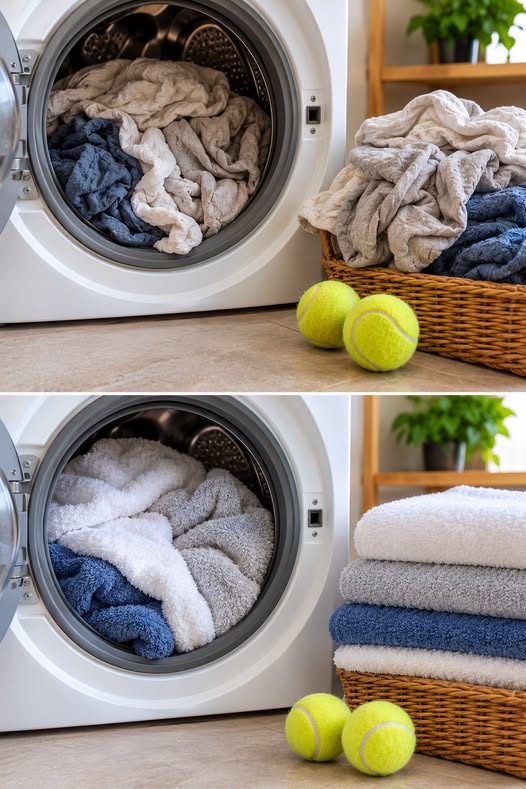
Doing laundry may seem like one of the simplest household chores, but keeping clothes clean, soft, and fresh can sometimes be challenging. Towels may become stiff, blankets can lose their fluffiness, and bulky items may take hours to dry. That is why many people are discovering simple household tricks that promise to make laundry easier.
One popular trick involves putting a tennis ball inside the washing machine. It sounds unusual, but can this everyday sports accessory really improve your laundry results?
The answer depends on how you use it. Tennis balls are sometimes used to help loosen and separate bulky items, particularly in a tumble dryer. However, they do not automatically make clothes cleaner, eliminate detergent residue, or replace proper washing machine maintenance.
In this guide, we will explain how the tennis ball trick works, when it may be useful, which precautions to take, and how to keep your laundry soft and fresh without damaging your clothes or appliances.
The Secret Behind the Tennis Ball Laundry Trick
At first glance, a tennis ball seems to have little to do with washing clothes. However, its rounded shape and firm, slightly flexible surface can create movement when it comes into contact with bulky laundry.
The idea behind the trick is that the ball moves among the fabrics, helping prevent certain items from remaining tightly compressed together. This may be useful with bulky textiles, although the benefits depend on the type of fabric, the appliance, and the washing or drying cycle.
It is important to distinguish between washing and drying. A tennis ball is not a proven substitute for detergent, and adding one to a washing machine is unlikely to produce dramatically cleaner clothes. Its potential usefulness is generally more relevant when drying bulky items.
5 Things You Should Know About Using a Tennis Ball in Laundry
1. It May Help Separate Bulky Items
Large blankets, comforters, and padded garments can bunch together during laundry cycles. This can make it harder for water to move freely through the fabric during washing or for warm air to circulate during drying.
A ball moving among bulky items may help loosen some of these clumps. Nevertheless, the effect is not guaranteed, and a ball is not necessary for ordinary loads of everyday clothing.
For better washing results, avoid overloading the drum and follow the care instructions on the garment label.
2. It Does Not Replace Laundry Detergent
One common claim is that tennis balls help detergent spread more evenly and make clothes cleaner. Although movement inside the drum affects how laundry tumbles, there is no good evidence that adding a tennis ball significantly improves cleaning performance.
For effective washing, use a suitable detergent and follow the recommended dosage on its packaging. Too much detergent can leave residue, while too little may not remove dirt and body oils effectively.
If clothes regularly come out with white marks or a soapy feel, try reducing the detergent to the recommended amount, checking the load size, and selecting an additional rinse when appropriate.
3. It Is Not a Proven Fabric Softener
Some people believe that the gentle bouncing of a tennis ball makes towels and other fabrics softer. While mechanical movement can help separate fabrics, a tennis ball should not be considered a reliable replacement for fabric softener or other products designed for laundry care.
If your towels feel stiff, try avoiding excessive detergent, using the recommended amount of detergent for your water hardness, and ensuring that the towels dry completely.
For people who prefer to avoid fabric softeners, simply following the manufacturer’s washing and drying recommendations can help preserve the feel and absorbency of towels.
4. It May Be More Useful in a Tumble Dryer
The tennis ball trick is more commonly associated with tumble drying, particularly when drying bulky items such as comforters, sleeping bags, and padded jackets.
As the dryer turns, clean balls may help loosen compressed sections of the filling. This can sometimes improve how evenly a bulky item tumbles and dries.
However, tennis balls are not suitable for every fabric or dryer. They can create noise, their surface may shed or transfer color, and heat can affect some materials. Follow the appliance and garment manufacturers’ instructions before trying this method.
A safer alternative: Purpose-made wool dryer balls are designed for use in compatible tumble dryers. They can help separate laundry and may improve drying performance in some loads, although results vary.
5. It Will Not Clean Your Washing Machine
Another misconception is that tennis balls remove detergent buildup, prevent mold, or keep the washing machine cleaner. There is no reliable evidence that they provide these benefits.
Washing machine maintenance requires a different approach. Residue and unpleasant odors can develop when moisture, detergent, lint, and dirt accumulate inside the appliance.
Regular cleaning and proper ventilation are much more effective ways to maintain a fresh-smelling machine.
Should You Put a Tennis Ball Directly in the Washing Machine?
For most ordinary laundry loads, there is little reason to add a tennis ball to the washing machine. It is not a recommended universal laundry hack, and some appliance manufacturers may advise against putting foreign objects in the drum.
If you are considering trying it, check your washing machine’s user manual first. Avoid using worn, dirty, damaged, or brightly colored balls that could leave marks on fabric.
Do not use a tennis ball with delicate garments, silk, wool, lace, or other materials that require gentle treatment. Also avoid experimenting with expensive clothing, items with special coatings, or garments whose care labels prohibit the proposed washing method.
When in doubt, leave the ball out of the washing machine.
How to Get Cleaner Clothes Without Using a Tennis Ball
Fortunately, there are several reliable ways to improve your laundry results without adding anything unusual to the drum.
Avoid Overloading the Washing Machine
Clothes need enough room to move during the wash cycle. An overloaded drum can prevent effective cleaning and rinsing.
Follow the manufacturer’s load recommendations, particularly when washing towels, bedding, and heavy garments.
Use the Correct Amount of Detergent
More detergent does not necessarily mean cleaner clothes. Excess detergent can contribute to residue, unpleasant smells, and buildup inside the appliance.
Measure detergent according to the product instructions, the size of the load, and the level of soiling. Consider your local water hardness when selecting the appropriate amount.
Choose the Right Washing Cycle
Different fabrics require different washing conditions. Cotton towels may tolerate a different cycle from delicate garments, while heavily soiled clothing may need a longer or more intensive program.
Always check garment labels and use the cycle recommended for the fabric.
Clean the Detergent Drawer and Door Seal
Detergent drawers and rubber door seals can collect moisture, lint, and residue. Clean these areas according to the manufacturer’s instructions.
After cleaning, wipe away remaining moisture and inspect the seal for trapped debris.
Run a Washing Machine Cleaning Cycle
⏬Continued ⏬on the ⏬next ⏬page
