
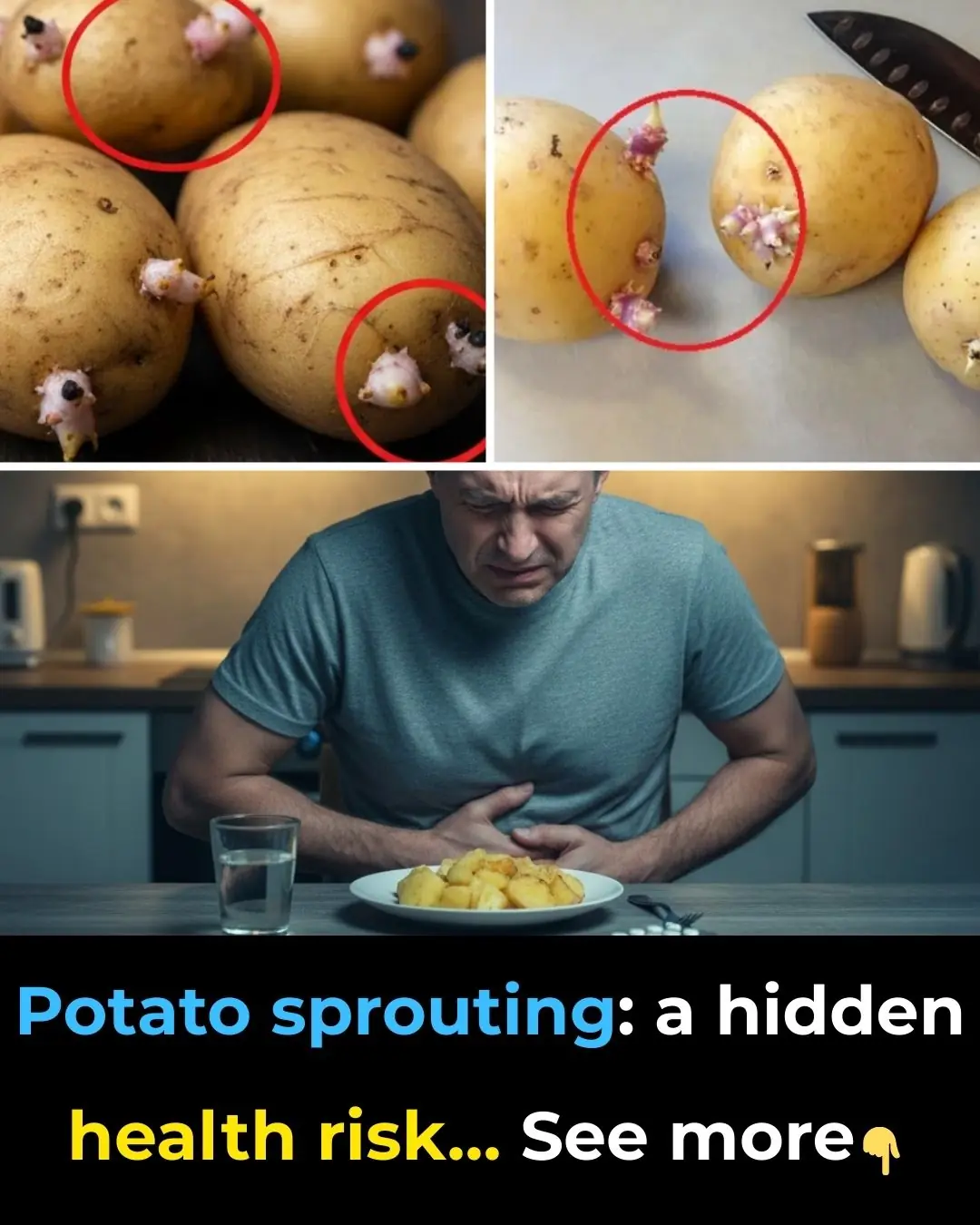
Potato Sprouting: A Hidden Health Risk
When a potato begins to sprout, it’s more than just a sign that it’s getting old — it’s actually a biological defense mechanism.
Potatoes naturally produce glycoalkaloids, primarily solanine and chaconine, to protect themselves from insects, mold, bacteria, and animals. These compounds act as natural pesticides for the plant.
In small amounts, glycoalkaloids are present in all potatoes and are generally safe. However, when potatoes are exposed to light, stored in warm or humid environments, or begin to sprout, toxin levels can rise significantly — especially around the eyes, sprouts, and green areas of the skin.
That’s when a common kitchen ingredient can quietly become a health concern.
⚠️ What Happens If You Eat Sprouted Potatoes?
Mild Effects
Early symptoms of glycoalkaloid poisoning may include:
Nausea
Stomach cramps
Vomiting
Diarrhea
A bitter or burning taste in the mouth
These symptoms occur because solanine irritates the digestive tract and begins affecting the nervous system.
Moderate Effects
With higher intake, symptoms may progress to:
Fever
Dizziness
Slowed or irregular heartbeat
Weakness
Confusion
At this stage, the toxins interfere with nerve signal transmission and muscle control.
Severe Effects (Rare but Serious)
In extreme cases of poisoning:
Hallucinations
Difficulty breathing
Paralysis
Coma
