
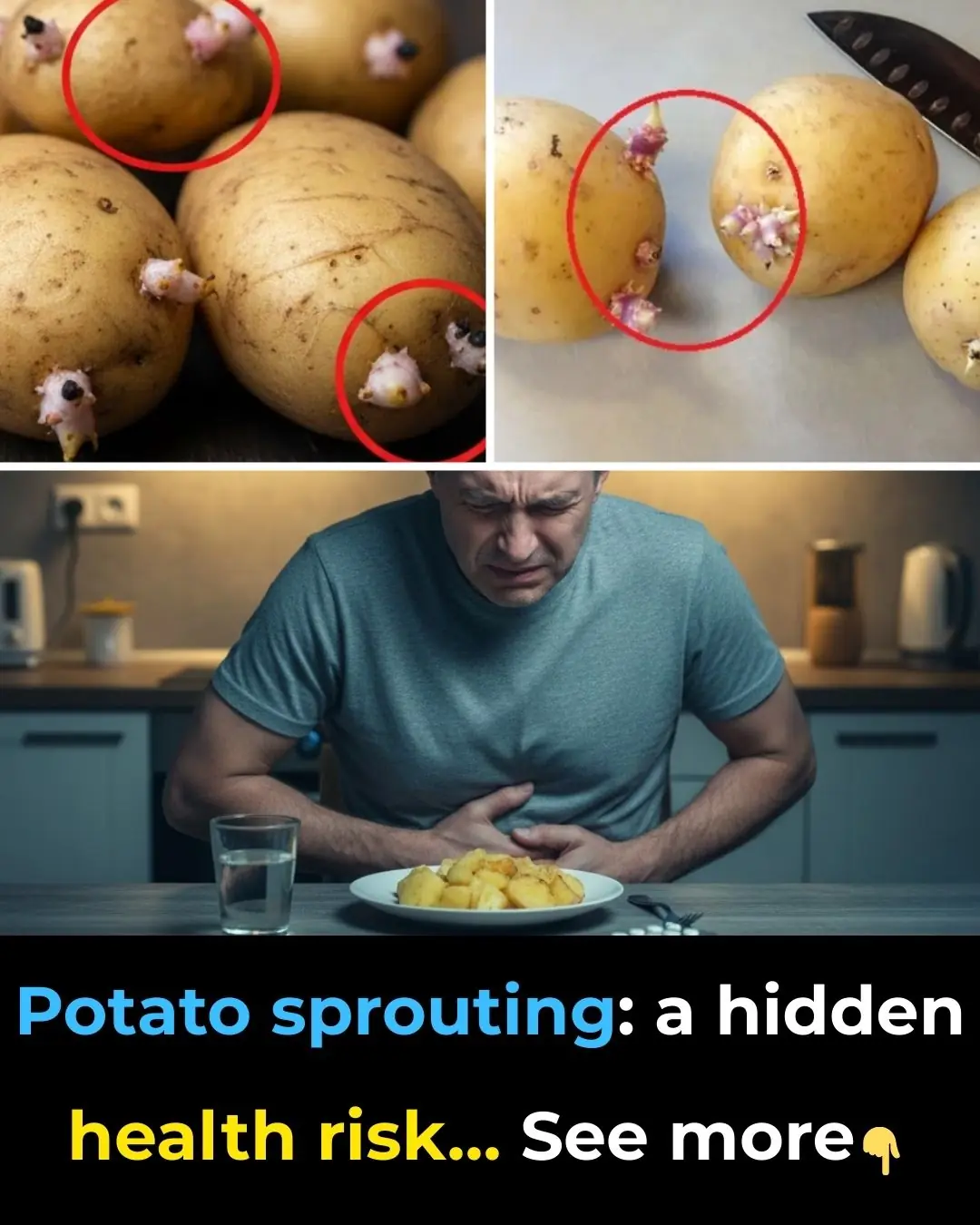
This is why trimming alone is only acceptable when the potato is otherwise fresh and firm.
✅ How to Prevent Potatoes from Sprouting
Proper storage dramatically reduces toxin development.
Ideal Storage Conditions:
Cool (7–10°C / 45–50°F)
Dark
Dry
Well-ventilated
Avoid:
Direct sunlight
Warm kitchens
Humid storage areas
Plastic bags without airflow
Do not refrigerate potatoes. Cold temperatures convert starch into sugar, altering taste and texture. In addition, refrigeration can contribute to undesirable chemical changes during cooking.
Store potatoes separately from onions. Onions release gases that accelerate sprouting.
Check your potatoes weekly and remove any sprouting ones to prevent affecting the rest of the batch.
For best quality and safety, use potatoes within 3–4 weeks of purchase.
📊 Quick Safety Guide
Situation Can You Eat It? What to Do
Firm potato, small sprouts, no green areas ✅ Yes (with caution) Remove sprouts + cut away surrounding area
Green skin or large sprouts ⚠️ No Discard immediately
Soft, wrinkled, bitter taste ❌ No Throw away
Stored in fridge ⚠️ Not recommended Move to cool, dark storage
🩺 Why This Matters
Although solanine poisoning is rare in modern times, cases still occur when people ignore visible warning signs like greening or heavy sprouting.
Glycoalkaloids:
Are resistant to heat
Are not easily destroyed by cooking
Affect both the digestive and nervous systems
A small sprout may not seem dangerous, but toxin levels can increase significantly without obvious signs beyond greening or bitterness.
Properly stored fresh potatoes provide valuable nutrients such as:
Vitamin C
Potassium
Fiber
Complex carbohydrates
These benefits are only safe when the potato is fresh and properly handled.
Final Advice
If in doubt, throw it out.
Saving a questionable potato is never worth risking your health. Choosing firm, fresh, properly stored potatoes ensures you receive their nutritional benefits — without exposure to potentially harmful toxins.
Your health always comes before minimizing food waste.
