
Very rarely, death
Severe toxicity is uncommon today but may occur in young children, elderly individuals, or those with compromised immune systems.
Importantly, repeated exposure to small amounts over time may lead to chronic toxicity, potentially causing persistent digestive discomfort, fatigue, and neurological symptoms.
🥔 Can Sprouted Potatoes Be Saved?
The answer depends on the condition of the potato.
✅ When It May Be Safe
If the potato is:
Firm
Not wrinkled
Free from green discoloration
Sprouts are short and minimal
It may be safe to eat only if you:
Remove the sprouts completely
Cut away at least 1 cm (½ inch) around each sprout
Peel off the skin thoroughly
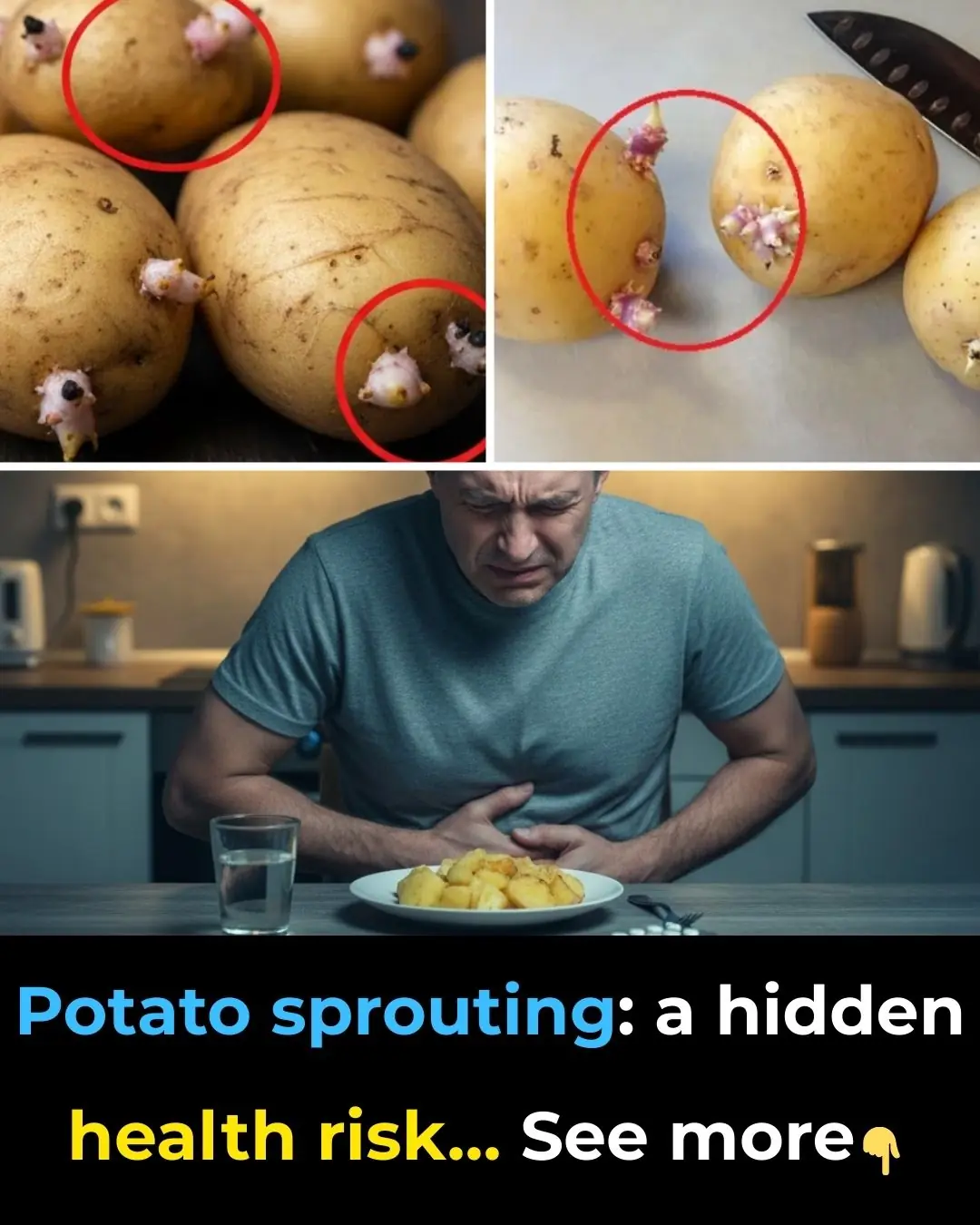
This is because solanine concentrates most heavily in the sprouts, eyes, and skin.
⚠️ When to Throw It Away
Discard the potato immediately if it is:
Green under the skin
Soft or shriveled
Deeply sprouted
Bitter tasting
The green color you see is chlorophyll — which itself is not toxic — but it indicates light exposure. And light exposure is exactly what triggers increased solanine production.
If a potato tastes bitter, do not continue eating it. Bitterness is a strong warning sign of elevated glycoalkaloids.
🧠 Important: Cooking Does NOT Eliminate the Toxin
Solanine is heat-stable.
Boiling, baking, or frying may reduce levels slightly, but not enough to make heavily sprouted or green potatoes safe. High temperatures do not fully destroy glycoalkaloids.
