
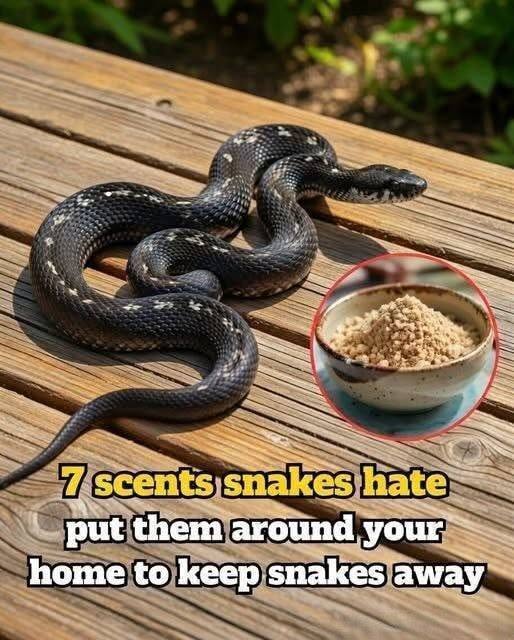
Introduction
Did you know that snakes rely heavily on their sense of smell to understand the world around them? Although they do not smell exactly like humans, snakes use specialized sensory organs to detect chemical signals from their surroundings, helping them find prey, recognize other snakes, and navigate their environment.
This has led to a popular question among homeowners: Are there certain smells that snakes dislike, and can these scents help keep them away from houses, gardens, and outdoor living spaces?
You may have heard that strong-smelling substances such as garlic, vinegar, cinnamon, or peppermint can repel snakes. However, the scientific evidence supporting these household remedies is limited, and no particular scent is guaranteed to keep snakes away.
Still, understanding how snakes respond to their environment can help you make better decisions about protecting your property.
In this article, we explore seven scents commonly suggested as snake deterrents, explain their limitations, and share practical steps that are more reliable for reducing unwanted snake encounters around your home.
How Do Snakes Smell?
Before looking at individual scents, it helps to understand how snakes detect chemical signals.
Snakes frequently flick their forked tongues in and out of their mouths. This collects tiny chemical particles from the air and surfaces around them. The particles are transferred to a specialized sensory structure in the roof of the mouth called the vomeronasal organ, also known as Jacobson’s organ.
This system helps snakes detect prey, identify potential mates, and gather information about their surroundings.
Because snakes are sensitive to chemical cues, some people assume that strong household odors will automatically drive them away. However, detecting a scent does not necessarily mean a snake will find it unpleasant or avoid the area.
The key point: Strong smells are not a dependable substitute for habitat management, sealing entry points, and reducing the conditions that attract snakes.
1. Garlic
Garlic is one of the most commonly mentioned natural snake repellents. Its strong odor comes from sulfur-containing compounds released when garlic is crushed or cut.
Some homeowners scatter crushed garlic near garden borders, sheds, or other areas where they worry about snakes appearing.
Does Garlic Really Repel Snakes?
There is insufficient reliable evidence that garlic consistently repels snakes in real-world conditions. A strong odor may affect an animal’s behavior in certain circumstances, but it should not be assumed to provide lasting protection.
Garlic odor also fades as the compounds disperse, and rain or watering can wash away residues.
How to Use Garlic Safely
If you choose to experiment with garlic as a garden odor, avoid placing it where children or pets might eat it. Garlic can be toxic to dogs and cats, particularly when ingested in significant quantities.
For better protection, remove piles of leaves and debris, keep grass trimmed, and avoid creating hiding places near doors and outdoor seating areas.
2. Peppermint Oil
Peppermint oil has a strong, fresh scent and is often promoted online as a natural way to repel snakes and other unwanted animals.
Its aroma comes largely from compounds such as menthol, which create a cooling sensation for humans.
Is Peppermint Oil Effective Against Snakes?
There is no strong evidence that peppermint oil reliably keeps snakes away from residential properties. Claims that it instantly drives snakes away are not well established.
Essential oils also evaporate, meaning any odor will diminish over time. Outdoor weather conditions make it difficult to maintain a consistent concentration.
Safety Considerations
Peppermint essential oil can irritate skin and may be harmful to pets if swallowed or used improperly. Concentrated oils should not be sprayed directly on wildlife.
Never spray essential oils into holes, burrows, or enclosed spaces where animals may be hiding.
If you want to reduce the likelihood of snakes entering your garden, focus on eliminating hiding places and sealing gaps around buildings.
3. Cinnamon
Cinnamon has a warm, spicy fragrance caused by naturally occurring aromatic compounds. It is often listed among household ingredients that supposedly deter snakes.
Some commercial animal-repellent products use aromatic ingredients, but that does not mean ordinary cinnamon powder or cinnamon oil has been proven to repel snakes effectively.
Can Cinnamon Keep Snakes Away?
Reliable evidence supporting cinnamon as a stand-alone snake deterrent is limited.
Sprinkling cinnamon around a garden should not be relied upon to prevent snakes from entering. Outdoor odors are diluted by wind, moisture, and changes in temperature.
A More Practical Approach
Instead of relying on cinnamon, inspect the areas around foundations, fences, storage sheds, and outdoor equipment.
Seal appropriate gaps in buildings, repair damaged screens, and keep woodpiles away from the house. These steps address the physical conditions that may allow snakes to shelter close to people.
4. Vinegar
Vinegar has a sharp, acidic odor that many people find unpleasant. Because snakes detect chemical cues, vinegar is sometimes suggested as a natural snake-repellent solution.
However, there is no convincing evidence that ordinary household vinegar provides reliable protection against snakes.
Should You Pour Vinegar Around Your Property?
Pouring vinegar along garden borders or around a building is unlikely to provide dependable, long-lasting protection. Rain and irrigation dilute it, while repeated application can affect some plants and surfaces.
Concentrated vinegar products can also irritate skin and eyes.
Avoid pouring vinegar into burrows or hiding places. Doing so may expose wildlife to an irritating substance without solving the underlying problem.
For a safer and more effective approach, remove unnecessary ground cover and maintain clear access around the outside of your home.
5. Clove Oil
Clove oil has a powerful spicy aroma because it contains eugenol, an aromatic compound also found in several other plants.
It is sometimes promoted as a natural animal repellent, including for snakes.
Does Clove Oil Work?
There is insufficient evidence that household clove oil consistently repels snakes outdoors. Even if a particular animal avoids a concentrated odor in a specific situation, this does not establish that the substance will keep snakes away from an entire property.
Clove oil is concentrated and may irritate skin and eyes. It can also be harmful if swallowed and may pose risks to pets.
What Should Homeowners Do Instead?
Keep garden storage areas tidy, avoid stacking materials directly against exterior walls, and inspect sheds for gaps that could provide shelter.
These measures help make the area less attractive as a hiding place without exposing wildlife, children, or pets to concentrated chemicals.
6. Eucalyptus
Eucalyptus is known for its distinctive, refreshing scent. Its leaves and essential oil contain aromatic compounds, including eucalyptol, that contribute to its characteristic smell.
Because the scent is strong, eucalyptus oil is sometimes recommended in homemade snake-repellent recipes.
Can Eucalyptus Repel Snakes?
Evidence that eucalyptus reliably repels snakes is limited. A strong botanical fragrance should not be confused with a proven wildlife-control method.
Planting eucalyptus or placing eucalyptus-scented products around a property will not guarantee that snakes stay away.
Use Essential Oils With Caution
Eucalyptus essential oil is concentrated and can be toxic if swallowed. It may also irritate skin and the respiratory tract when used improperly.
Keep essential oils away from children and pets, and do not apply them directly to snakes or other wildlife.
If snakes are regularly appearing around your home, a local wildlife professional can help identify the species and recommend appropriate preventive measures.
7. Ammonia
 Continued on the next page
