
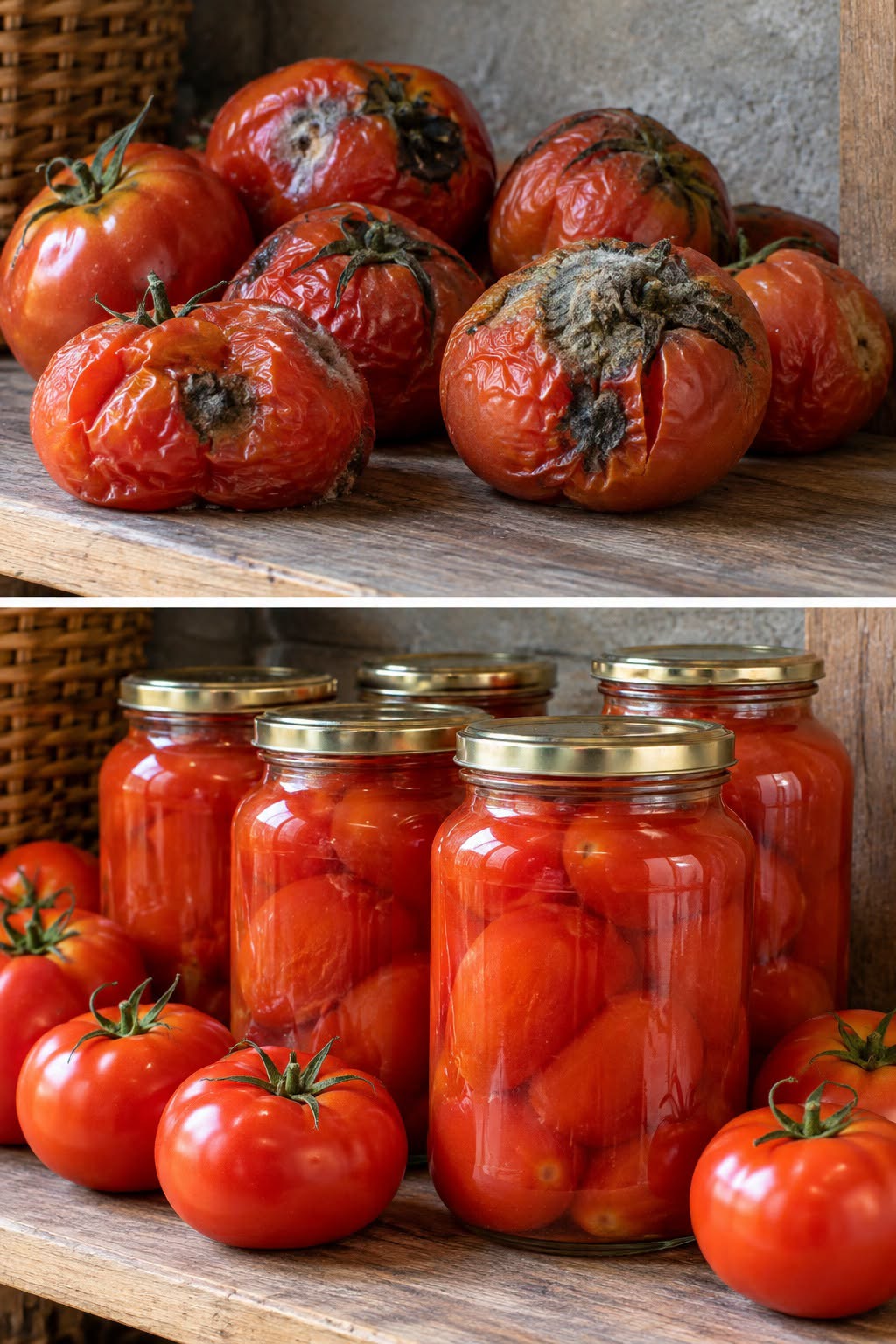
Want to enjoy the delicious taste of summer tomatoes even when the season is over? 🍅 Homemade tomato preserves are a wonderful way to make the most of ripe, juicy tomatoes and prepare a versatile ingredient for soups, pasta sauces, stews, and countless family meals.
With just fresh tomatoes, a little basil, and clean glass jars, you can prepare a flavorful tomato puree at home. However, safe long-term storage requires more than boiling tomatoes and sealing jars. Tomatoes vary in acidity, so a tested preservation method is essential to protect your family from foodborne illness.
In this guide, you’ll learn how to prepare homemade tomato puree, choose the best tomatoes, and preserve your harvest safely without adding vinegar.
🌿 Why Make Homemade Tomato Preserves?
Homemade tomato puree is practical, delicious, and easy to use in everyday cooking.
Here are some reasons to prepare it at home:
- 🍝 Perfect for pasta: Use it as the base for spaghetti, lasagna, and other Italian-inspired dishes.
- 🍲 Great for soups and stews: Add a rich tomato flavor to your favorite recipes.
- 🌱 Customize the flavor: Add basil when preparing a recipe, or keep the puree plain for greater versatility.
- 💰 Make the most of seasonal produce: Preserve extra tomatoes when they are plentiful and affordable.
- 🏡 Enjoy homemade flavor: Choose fresh, ripe tomatoes and control the ingredients you use.
🛒 Ingredients for Homemade Tomato Puree
The following ingredients are suitable for preparing a basic puree before refrigeration, freezing, or using a tested canning recipe.
- 7 kg (approximately 15.4 lb) ripe tomatoes
- Fresh basil, optional
- Water for washing and preparing equipment
Important: These ingredients alone do not make a shelf-stable canned product. If you plan to store tomato puree in sealed jars at room temperature, follow a tested canning recipe and its required acidity and processing instructions.
🍅 How to Prepare Fresh Tomato Puree
Step 1: Choose Fresh, Ripe Tomatoes
Select firm, ripe tomatoes with a rich color and fresh smell. Avoid tomatoes that are moldy, rotten, or badly damaged.
Wash them thoroughly under running water and remove the stems and any damaged areas.
Step 2: Cut and Blend the Tomatoes
Cut the tomatoes into smaller pieces and blend them into a puree. If you prefer a smoother texture, pass the mixture through a food mill or sieve to remove the skins and seeds.
Step 3: Cook the Puree
Pour the puree into a large saucepan and bring it to a gentle boil, stirring regularly to prevent sticking.
Allow it to simmer until it reaches your preferred consistency. The cooking time will depend on the tomatoes’ water content and the thickness you want.
Skim away excess foam if necessary.
Step 4: Add Basil for Extra Flavor
Fresh basil adds a wonderful aroma to tomato dishes. You can add it while preparing a sauce for immediate use or when cooking with the puree later.
For long-term canning, do not add extra herbs or other ingredients unless the tested recipe specifically allows them.
Step 5: Choose a Safe Storage Method
Once the puree is prepared, decide how you intend to store it.
- Refrigerator: Cool it promptly, place it in a clean, covered container, and use it within 3–4 days.
- Freezer: Transfer the cooled puree into freezer-safe containers, leaving room for expansion. Freeze in convenient portions for later meals.
- Room-temperature pantry: Use a tested home-canning recipe designed specifically for tomato puree or tomato sauce. Follow its exact acidity, jar size, processing time, and altitude adjustments.
⚠️ Never assume that a jar is safe simply because its lid has sealed. A vacuum seal does not prove that harmful microorganisms or toxins are absent.
🫙 Can You Preserve Tomatoes Without Vinegar?
Yes, it is possible to can tomatoes without adding vinegar, but you must use a tested method that specifies the appropriate ingredients and processing steps.
For many standard home-canning recipes, the recommended acidifier is bottled lemon juice or food-grade citric acid rather than vinegar. The acidity helps make the tomatoes safe for the specified canning process.
According to the National Center for Home Food Preservation, standard guidance for whole, crushed, or juiced tomatoes calls for one of the following amounts:
- For a pint jar (about 475 ml): 1 tablespoon bottled lemon juice or ¼ teaspoon citric acid.
- For a quart jar (about 950 ml): 2 tablespoons bottled lemon juice or ½ teaspoon citric acid.
These amounts are acidity guidelines, not a complete canning recipe. You must also follow the appropriate preparation and processing instructions for the particular tomato product and jar size.
Do not simply omit the acidifier because your tomatoes taste sour. Taste does not reliably indicate whether tomatoes are acidic enough for safe canning.
⏳ Can Homemade Tomato Jars Last for Two Years?
The claim that homemade tomatoes will reliably last two years using only boiled puree and sealed jars is not a safe guarantee.
Properly canned foods may remain sealed for extended periods, but for the best quality, home-canned foods are generally recommended for use within one year. Their safety depends on using a validated recipe, correct processing, intact seals, and suitable storage conditions.
If you want to keep tomato puree for longer without adding vinegar or another acidifier, freezing is a practical alternative. Frozen puree can maintain good quality for months, especially when stored in airtight, freezer-safe containers at a consistent temperature of 0°F (-18°C) or below.
🧼 Tips for Better Tomato Preservation
 Continued on the next page
