
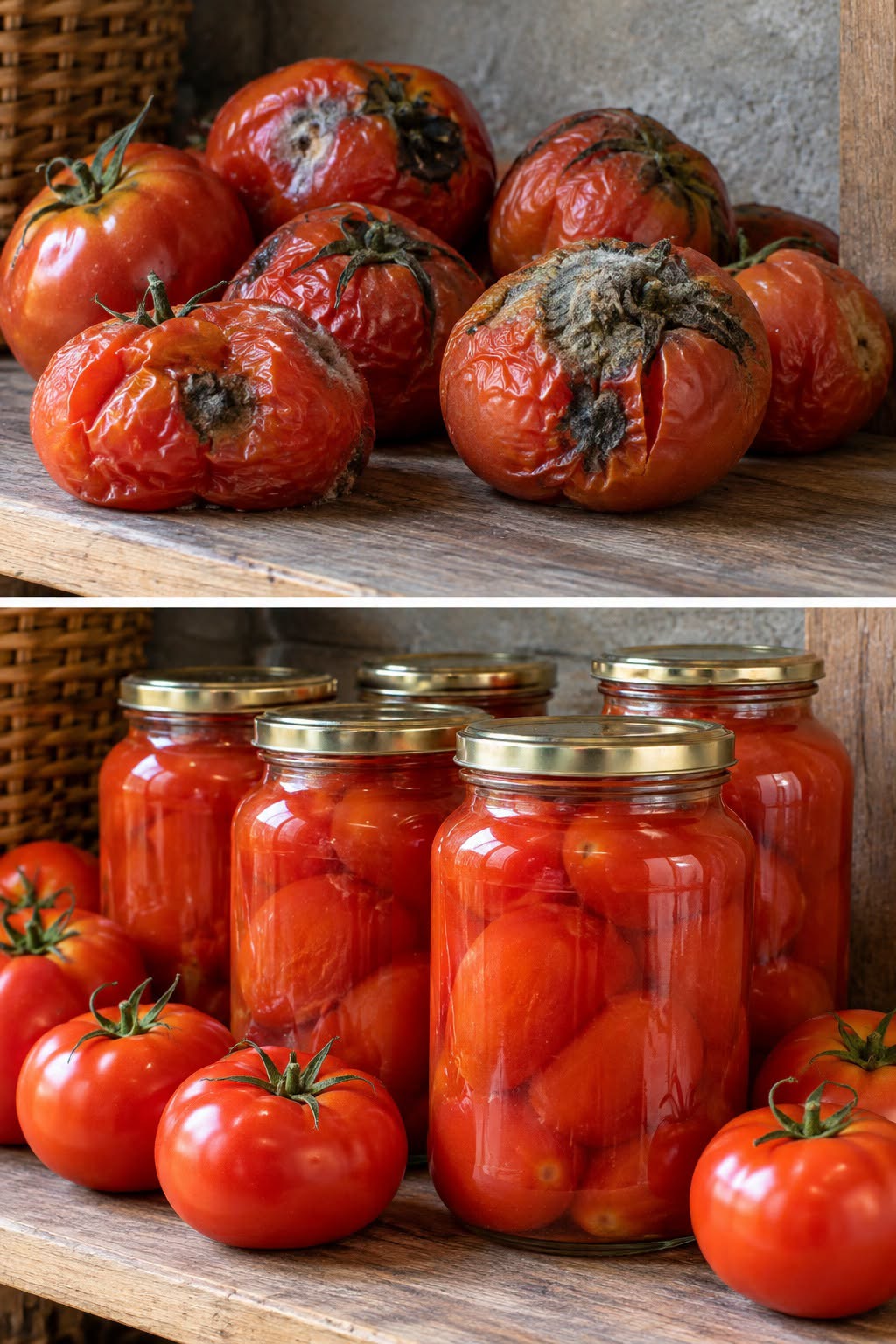
🧼 Tips for Better Tomato Preservation
Follow these simple habits to improve both quality and safety:
- Choose fresh, undamaged tomatoes.
- Wash your hands and keep preparation surfaces clean.
- Use jars intended for home canning when following a canning recipe.
- Follow tested processing times instead of estimating them.
- Label containers with the preparation date.
- Store frozen puree in small portions to make defrosting easier.
- Keep refrigerated puree cold and use it promptly.
- Never taste food from a jar that appears spoiled or was processed using an unsafe method.
🚨 Warning Signs of Spoilage
Discard a jar without tasting its contents if you notice a bulging lid, leakage, spurting liquid, mold, or other signs of spoilage. However, dangerous toxins may be present even when the food looks and smells normal.
If you suspect that a jar was improperly canned, do not taste it to check whether it is safe.
🍝 How to Use Homemade Tomato Puree
Once your puree is ready, there are many delicious ways to use it.
- Classic tomato pasta sauce: Simmer the puree with garlic, olive oil, and herbs.
- Homemade tomato soup: Combine it with stock, onion, and your favorite seasonings.
- Vegetable stew: Add it to potatoes, peppers, zucchini, or beans.
- Pizza sauce: Season it with oregano, garlic, and a little olive oil.
- Rice dishes: Use it as a flavorful base for tomato rice or Mediterranean-style recipes.
Homemade tomato puree makes everyday cooking easier and helps you enjoy the flavor of ripe tomatoes throughout the year.
❓ Frequently Asked Questions
1. Do I have to add vinegar to preserve tomatoes?
No. Many tested tomato-canning recipes use bottled lemon juice or citric acid instead of vinegar. Follow the exact instructions for your chosen recipe.
2. Can I seal tomato jars by pouring in hot puree?
Simply pouring hot puree into jars and closing the lids is not a reliable preservation method for room-temperature storage. Use a tested canning procedure with the required processing steps.
3. Can I use fresh lemon juice instead of bottled lemon juice?
For standard canning guidance, bottled lemon juice is preferred because its acidity is consistent. Do not substitute fresh lemon juice unless the tested recipe specifically permits it.
4. Is it safe to store homemade tomato jars in a cupboard for two years?
Do not rely on a two-year storage claim for jars prepared using an untested method. Follow tested canning instructions and aim to use properly canned products within one year for best quality.
5. What is the easiest alternative to canning?
Freezing tomato puree is a straightforward option. Cool it promptly, package it in freezer-safe containers, leave room for expansion, and freeze it in useful portions.
❤️ Final Thoughts
Preserving tomatoes at home is a rewarding way to enjoy seasonal produce and make everyday cooking easier. Fresh tomatoes and basil can create a delicious puree for pasta, soups, and family meals.
The key is to choose the right storage method. Refrigeration and freezing are convenient options, while room-temperature storage requires a tested canning recipe and careful attention to food safety.
Enjoy the taste of homemade tomatoes throughout the year—and always put safe preservation ahead of claims promising a guaranteed two-year shelf life. 🍅🌿
