
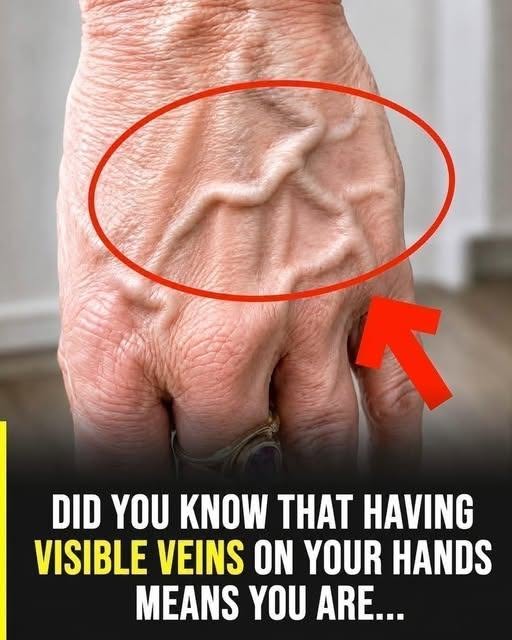
Have you ever noticed the veins on the backs of your hands becoming more prominent, especially as you get older? For many people, visible hand veins are a normal part of the body’s anatomy. They may become easier to see because of changes in the skin, body composition, temperature, or physical activity.
However, the appearance of veins can sometimes change because of an underlying medical condition. Understanding the difference between normal visible veins and changes that deserve medical attention can help you make informed decisions about your health.
Here are seven common reasons why veins may become more noticeable on your hands and when you should consider seeing a healthcare professional.
1. Natural Aging and Thinner Skin
One of the most common reasons for visible veins is aging.
As we grow older, the skin gradually loses collagen, elasticity, and some of its underlying fullness. The layer of tissue that normally helps conceal veins may also become thinner.
As a result, veins on the backs of the hands can appear larger or more prominent, even when they are functioning normally.
This change often happens gradually and may occur alongside wrinkles, age spots, and reduced skin elasticity.
What you can do: Protect your hands from excessive sun exposure, apply moisturizer regularly, and use broad-spectrum sunscreen with SPF 30 or higher when outdoors. These measures help protect skin health, although they will not necessarily make visible veins disappear.
2. Low Body Fat or Recent Weight Loss
The amount of tissue beneath your skin affects how easily veins can be seen.
People with less body fat may have more prominent veins in their hands and forearms because there is less tissue covering them. Significant weight loss can make veins more noticeable, even if the veins themselves have not changed.
This is not automatically a sign of illness. However, unexplained weight loss should not be ignored, particularly when accompanied by fatigue, weakness, or other new symptoms.
What you can do: If your weight loss was intentional and you otherwise feel well, visible veins may simply reflect changes in body composition. If you have lost weight without trying, arrange a medical evaluation.
3. Exercise and Physical Activity
Have you noticed your hand or arm veins becoming more visible after lifting weights, doing push-ups, or performing strenuous exercise?
During physical activity, blood flow increases and veins near the skin may temporarily become more prominent. Muscle contractions can also influence the appearance of superficial veins.
For many people, this is a normal response to exercise.
What you can do: Allow your body to cool down and rest after strenuous activity. If the veins return to their usual appearance and there are no other symptoms, the change is generally less concerning.
Seek medical advice if a new change persists or occurs with pain, swelling, or unusual skin discoloration.
4. Hot Weather and Warm Temperatures
Temperature can influence how visible your veins appear.
In warm conditions, blood vessels near the surface of the skin widen to help the body release heat. This can make superficial veins more noticeable, including those on the hands and arms.
You may notice the change after a hot shower, spending time outdoors in hot weather, or exercising in a warm environment.
What you can do: Move to a cooler environment and allow your body to return to a comfortable temperature. Drink fluids according to your needs and any medical advice you have received.
People who have been advised to limit fluid intake because of heart or kidney disease should follow their healthcare professional’s instructions.
5. Genetics and Natural Body Differences
Some people naturally have more visible veins than others.
Genetics, skin thickness, vein location, body composition, and other physical characteristics can influence how prominent the veins on your hands appear.
If your hand veins have always been noticeable, and their appearance has remained stable without pain or swelling, this may simply be a normal feature of your body.
What you can do: Visible veins that have been present for years and cause no symptoms usually do not require treatment. If you notice a sudden change, however, consider getting it assessed rather than assuming it is hereditary.
6. Enlarged Veins or an Underlying Vein Condition
Not every prominent vein is caused by aging or exercise. Some veins become enlarged because of changes in blood flow or the structures that help blood return to the heart.
Varicose veins are enlarged, often twisted veins that commonly develop in the legs. They can cause aching, heaviness, swelling, itching, or skin changes.
Other vein problems can cause localized swelling, tenderness, or inflammation. The appearance of a vein alone is not enough to diagnose a condition.
What you can do: Arrange a medical evaluation if a vein becomes newly enlarged, painful, hard, warm, or associated with swelling. A healthcare professional can determine whether examination or imaging is needed.
7. Inflammation or a Blood Clot
Although many visible veins are harmless, certain changes need prompt attention.
Inflammation of a superficial vein can cause tenderness, redness, warmth, or a firm area along the vein. A blood clot in a deeper vein can cause swelling and pain in the affected limb.
