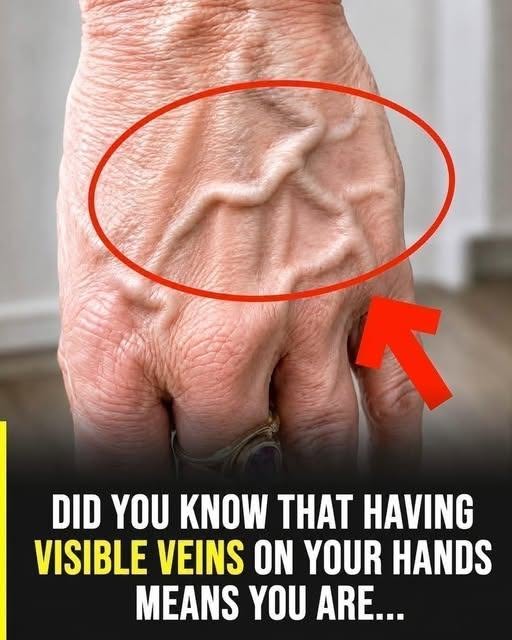

These problems cannot be diagnosed from a photograph, and not every visible vein indicates a clot.
Seek urgent medical assessment if a vein becomes suddenly painful or swollen, especially when one hand or arm is noticeably more swollen than the other.
Call emergency services if you experience sudden difficulty breathing, chest pain, fainting, or coughing up blood, as these can be signs of a potentially life-threatening complication.
Visible veins are generally less concerning when they have been present for a long time, appear similarly on both hands, and cause no discomfort.
It is worth speaking with a healthcare professional if you notice:
The pattern of symptoms, how quickly the change developed, and your medical history all help determine whether further investigation is needed.
If the veins are prominent because of normal aging or reduced fullness beneath the skin, there may be ways to change their appearance, although results vary.
Helpful steps include:
Some cosmetic procedures may reduce the appearance of selected veins, but they are not necessary for everyone and carry their own risks.
Do not attempt to inject, tie off, or otherwise treat veins at home. A medical professional should evaluate any vein that causes pain or other symptoms before cosmetic treatment is considered.
Not necessarily. Visible veins are often a normal feature of the body’s anatomy and do not, by themselves, indicate poor circulation. Pain, swelling, skin changes, or other symptoms may warrant further assessment.
Not on their own. Vein appearance can vary with temperature, exercise, body composition, and other factors. You cannot reliably determine hydration status by looking at the veins on your hands.
As skin becomes thinner and loses some of its underlying fullness, veins may become easier to see. This is a common change and does not automatically indicate a medical problem.
In general, visible veins alone are not a reason to avoid exercise. Physical activity can temporarily make veins more noticeable. If you have new pain, swelling, or another unusual symptom, seek medical advice before assuming it is a normal exercise response.
Veins that become more prominent because of heat or exercise may become less noticeable when the body cools down or activity stops. Veins that are prominent because of aging or anatomy may remain visible.
Visible veins on the backs of your hands can be a normal result of aging, thinner skin, genetics, lower body fat, exercise, or warm weather. Their appearance alone is not enough to determine whether you have a health problem.
Pay attention to changes rather than appearance alone. New pain, warmth, swelling, or sudden changes deserve medical attention, while long-standing, symptom-free veins are often harmless.
If you are concerned about a change in your veins, a healthcare professional can assess your symptoms and help determine whether further testing is necessary.
This article is for educational purposes only and is not a substitute for professional medical advice, diagnosis, or treatment.
